
Tucows connects customers to the internet through domain services, telecom software and fiber access. The Toronto-based company reported $100.0 million of third-quarter 2026 revenue and a $10.3 million net loss. It is an established operating business, but its financial story has been complicated by the demands of building networks. Quarterly results
The deal behind the jump
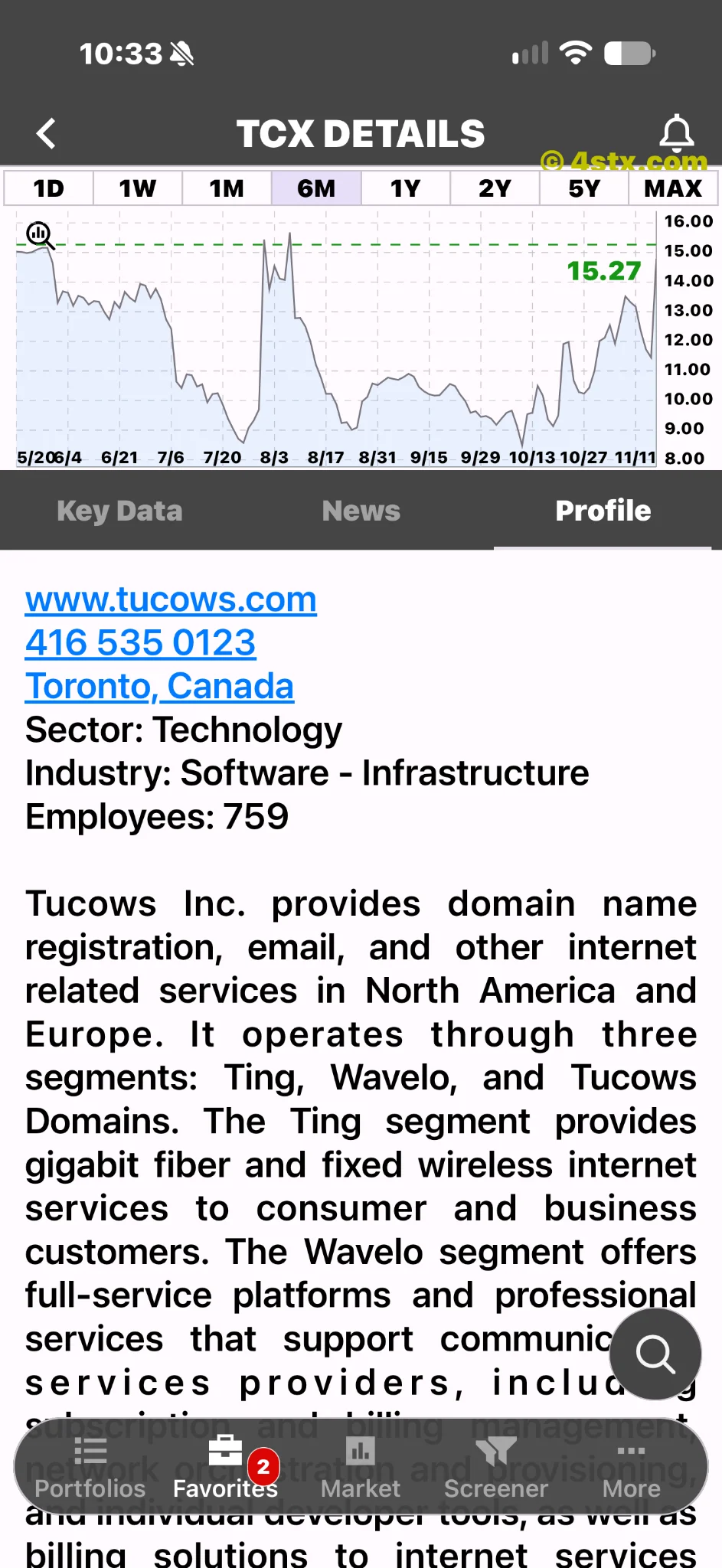
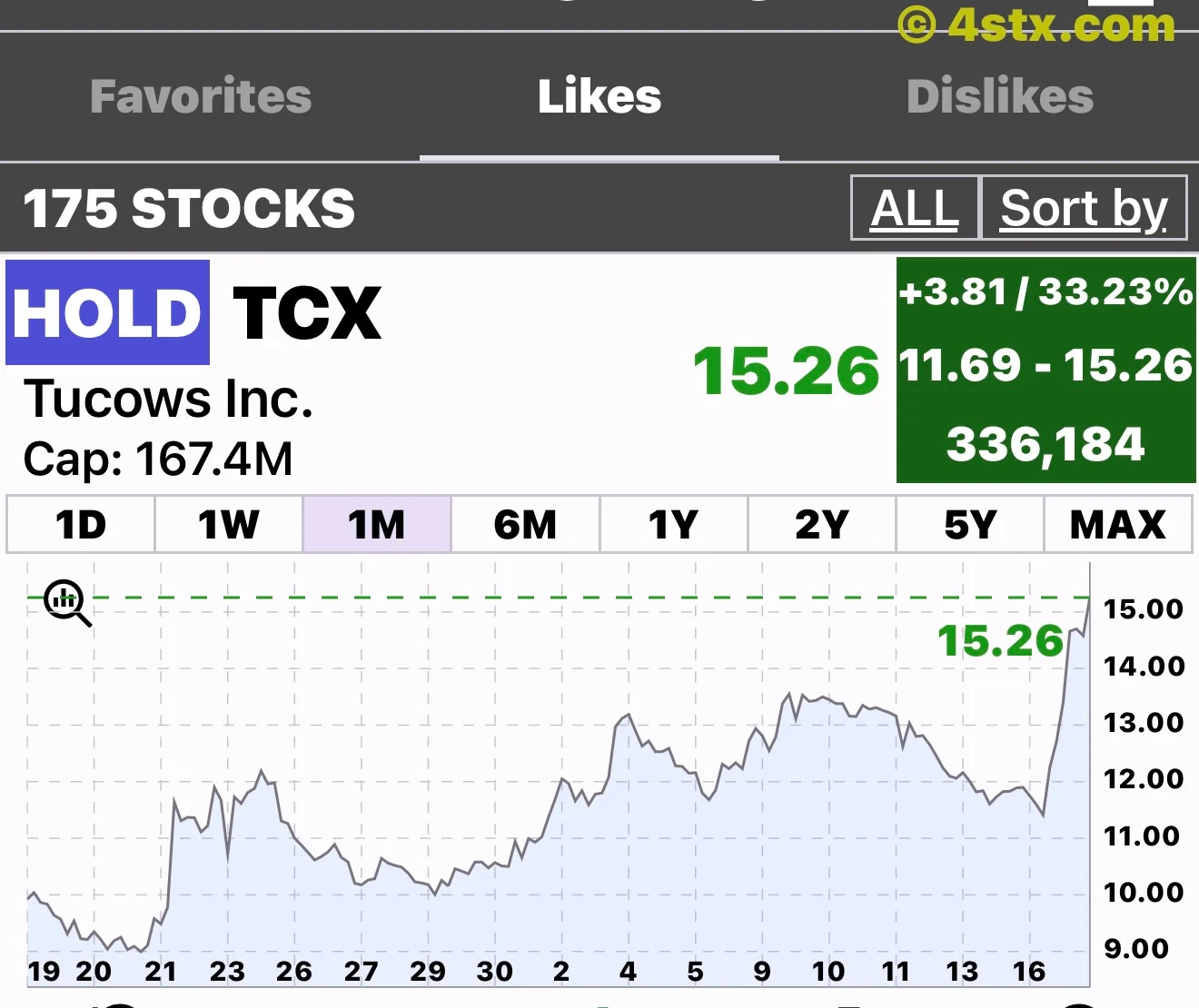
The StockRank screenshot supplied on November 17 shows TCX at $15.26, up +33.23%, with 336,184 shares traded. That is an intraday observation, not an official closing price. The clearest same-day development is Tucows’ agreement to sell Ting’s owned fiber markets to Clearwave. The transaction is expected to remove approximately $301.5 million of securitized debt at closing. Company announcement
That provides a credible explanation for investor enthusiasm, although a news release cannot identify every buyer’s motive. A company can become more attractive by shrinking the part of its business that consumes capital. The question is whether the remaining operations can produce more dependable cash for shareholders, not whether a large headline number looks impressive.
Debt relief is not a cash payday
The consideration is nominal. The debt remains with the business being sold; this is not a $301.5 million cash payment to Tucows. The company will also contribute $3 million at closing, and Ting’s partner markets remain outside the sale. These details matter because a sale headline can make two very different outcomes sound alike.
Our view is that reducing complexity is constructive. It can make a company easier to evaluate and give management fewer competing demands. But there is a cost to simplification: shareholders must judge what earnings and assets leave with the liabilities. Looking only at the amount of debt removed misses half the transaction.
The buyer sees an operating network
Clearwave says the acquired operations add approximately 170,000 homes and businesses passed by fiber across seven markets in five states. That describes infrastructure reach, not the number of paying subscribers. Buyer announcement
The distinction is useful. A network can pass a home without earning revenue from that household. Investors should be similarly careful with every operating measure in a transaction presentation: footprint, customers, revenue and cash flow answer different questions.
What the rally does not settle
The supplied one-month chart shows a sharp rebound from roughly $11.50 toward $15.26. The six-month profile view reads $15.27 and places that rebound near earlier peaks around $15–$16, after several deep declines. These are separate captured quotes, not a contradiction or official closing prices. The images do not establish a durable breakout or an unusual-volume multiple because no comparable average-volume series is provided. Its HOLD label is StockRank’s classification, not this article’s recommendation.
A positive P/E is not a useful shorthand for a business reporting losses. More importantly, historical ratios may describe a business mix that is about to change. The sensible next step is to examine the post-sale cash profile and the final closing terms. Today’s price move signals a change in expectations; execution will decide whether that optimism is earned. A cleaner structure is a starting point, not a substitute for results. Investors still need to watch operating discipline, retained liabilities and the cash that actually reaches the parent company.