
SELLAS Life Sciences develops experimental cancer medicines rather than running an established commercial drug franchise. Its latest quarterly update reported $134.7 million of cash at September 30, 2026 and a third-quarter net loss of −$10.1 million. That financial scale matters because the market is valuing future clinical and commercial possibilities, not a stream of existing product profits. Company quarterly update.
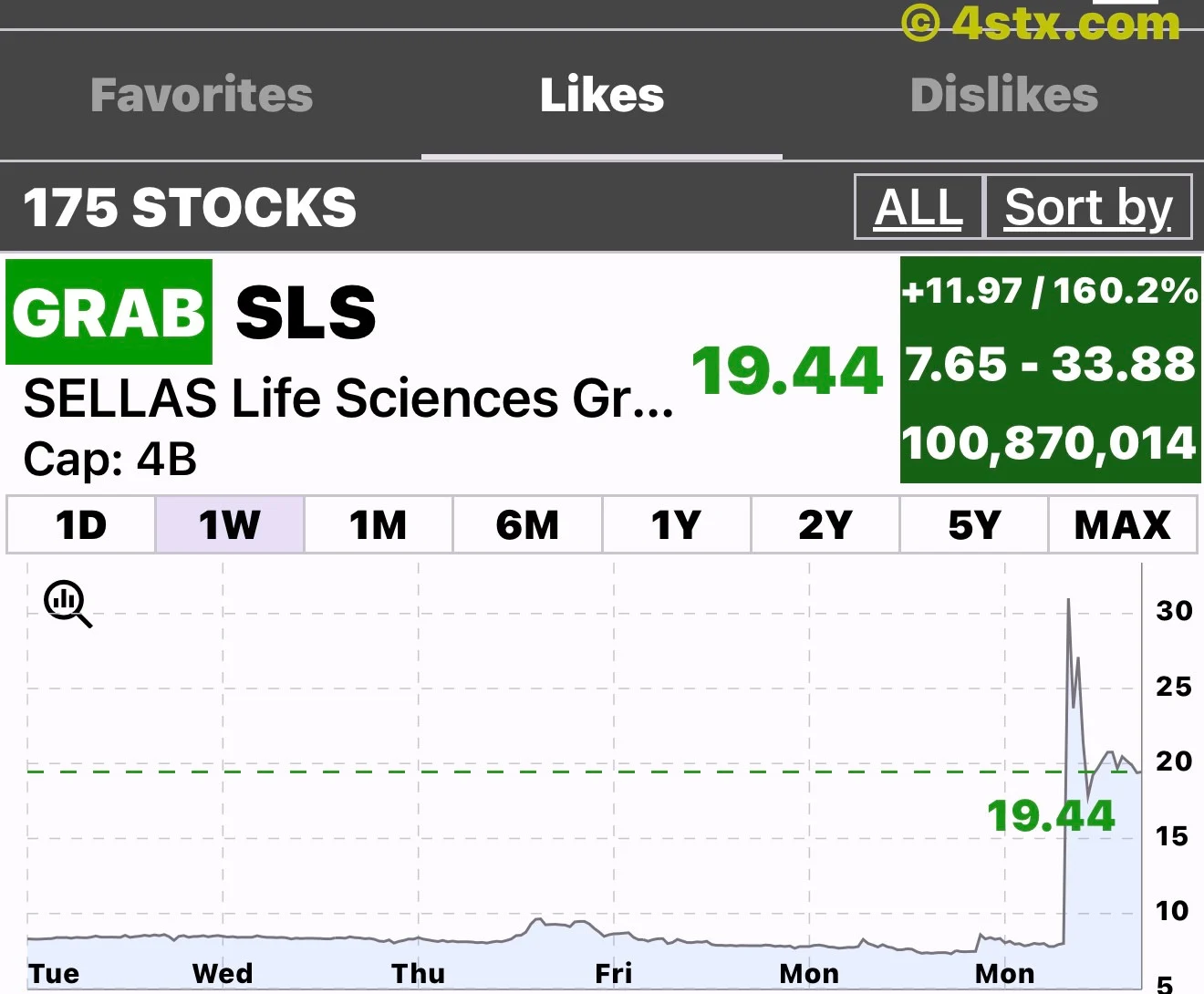
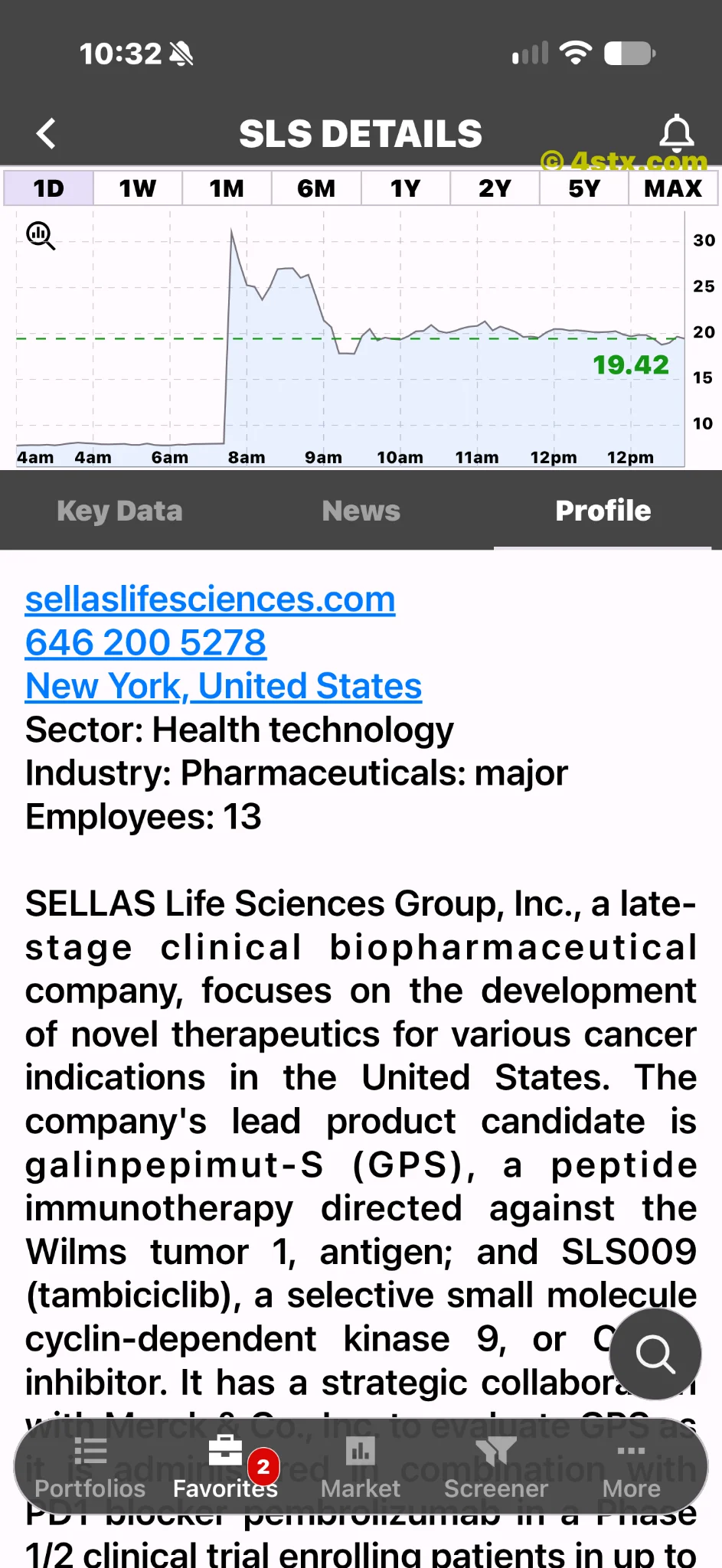
The StockRank screenshot supplied for this story shows SLS at $19.44, up +160.20%, with volume of 100,870,014 shares and a displayed market capitalization of $4 billion. These are screenshot-time figures, not a closing price or a promise that the gain will hold. A single intraday observation cannot establish a one-month or three-month return, and no such return is being inferred here.
The news behind the jump
On November 17, 2026, SELLAS reported that its Phase 3 REGAL trial of galinpepimut-S met its overall-survival primary endpoint in a defined acute myeloid leukemia population. Median survival was 24.0 months versus 14.7 months with the comparator; the hazard ratio was 0.59, with p=0.035. The company intends to discuss the results with the FDA and prepare a biologics application. This is a substantial clinical catalyst, not an approval announcement. SEC-filed results.
Our interpretation is straightforward: investors received a concrete result where they previously faced a major binary uncertainty. That can change expectations abruptly. The timing and substance of the announcement provide a much firmer explanation for the move than an unsupported rumor about a buyout or a claim that short sellers must be responsible.
Why the distinction matters
A successful primary endpoint can strengthen a development program, but the stock market and the regulatory process answer different questions. Investors decide what they are willing to pay today. Regulators evaluate a complete submission, its analyses, manufacturing information and benefit-risk case. A higher share price does not substitute for that review.
It is good that the company has supplied numerical outcomes that readers can examine rather than only promotional adjectives. It would be a mistake, however, to turn one headline into a guarantee of approval, broad usefulness in every leukemia setting, or a particular future sales level. Those are separate claims requiring separate evidence.
A large move changes the valuation question
A +160.20% rise means that someone buying at the screenshot price is making a very different valuation decision from someone who owned the shares before the announcement. The relevant question is not simply whether the news is positive. It is how much successful development, launch execution and eventual demand the new share price already assumes.
Conventional earnings multiples are not a helpful shortcut for a company reporting losses. Nor should a price-to-sales label be invented from hypothetical future product revenue. This article does not assign either multiple or a target price. The screenshot's market capitalization is useful context, but it is not an independently reconciled fully diluted valuation.
What to watch next
The practical checklist is the complete clinical presentation, the company's next regulatory update, and the financing and operating plans that follow. Quarterly cash is a dated balance, not a guarantee that development or commercialization can be completed without more capital. Total debt and a comparable average-volume figure were not independently established for this article, so neither is guessed.
The strong clinical news deserves attention. The equally important discipline is not to confuse an encouraging scientific milestone with a risk-free investment. SLS has a verified reason to be moving, but its next chapter still depends on execution, regulatory review and the price investors choose to pay.
What the two charts show
The one-week image shows an abrupt jump from around $8 to above $30, followed by a retreat toward $19.44. The separate intraday profile image reads $19.42. Those slightly different captured quotes are not official closing prices. The charts show that a large gain from the prior session can coexist with a substantial pullback from the day's peak. The GRAB badge is StockRank's classification, not this article's recommendation.