
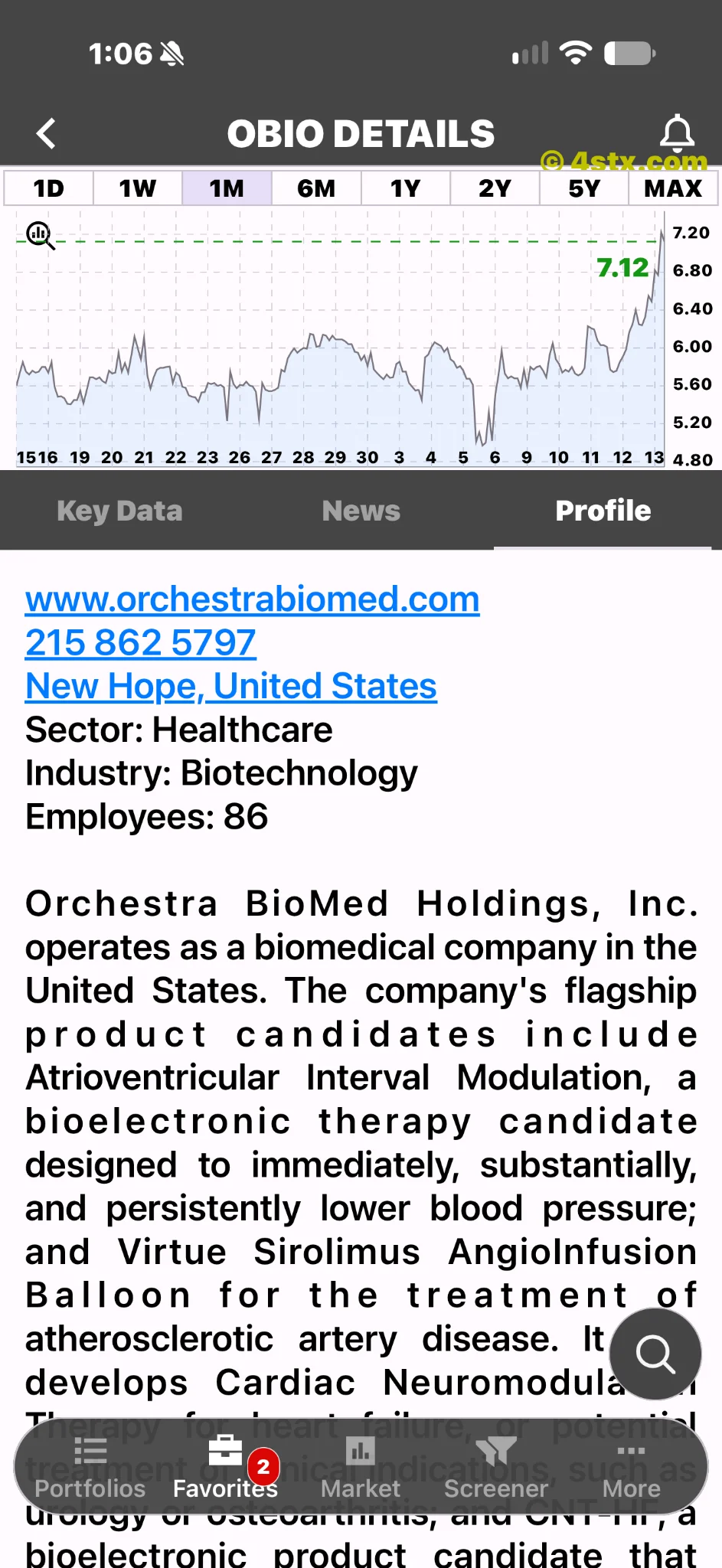
Orchestra BioMed develops cardiovascular technologies, including a hypertension therapy designed for certain pacemaker patients. This is a development-stage business, not an established earnings machine: its September quarter produced $91,000 in revenue and an $18.75 million net loss. The September 30 balance sheet carried $21.15 million in notes payable and $14.46 million in loans, alongside a separate $36.80 million royalty-purchase obligation. The StockRank profile lists 86 employees, an app-displayed count rather than an independently verified current headcount. Quarterly filing
What changed around the rally?
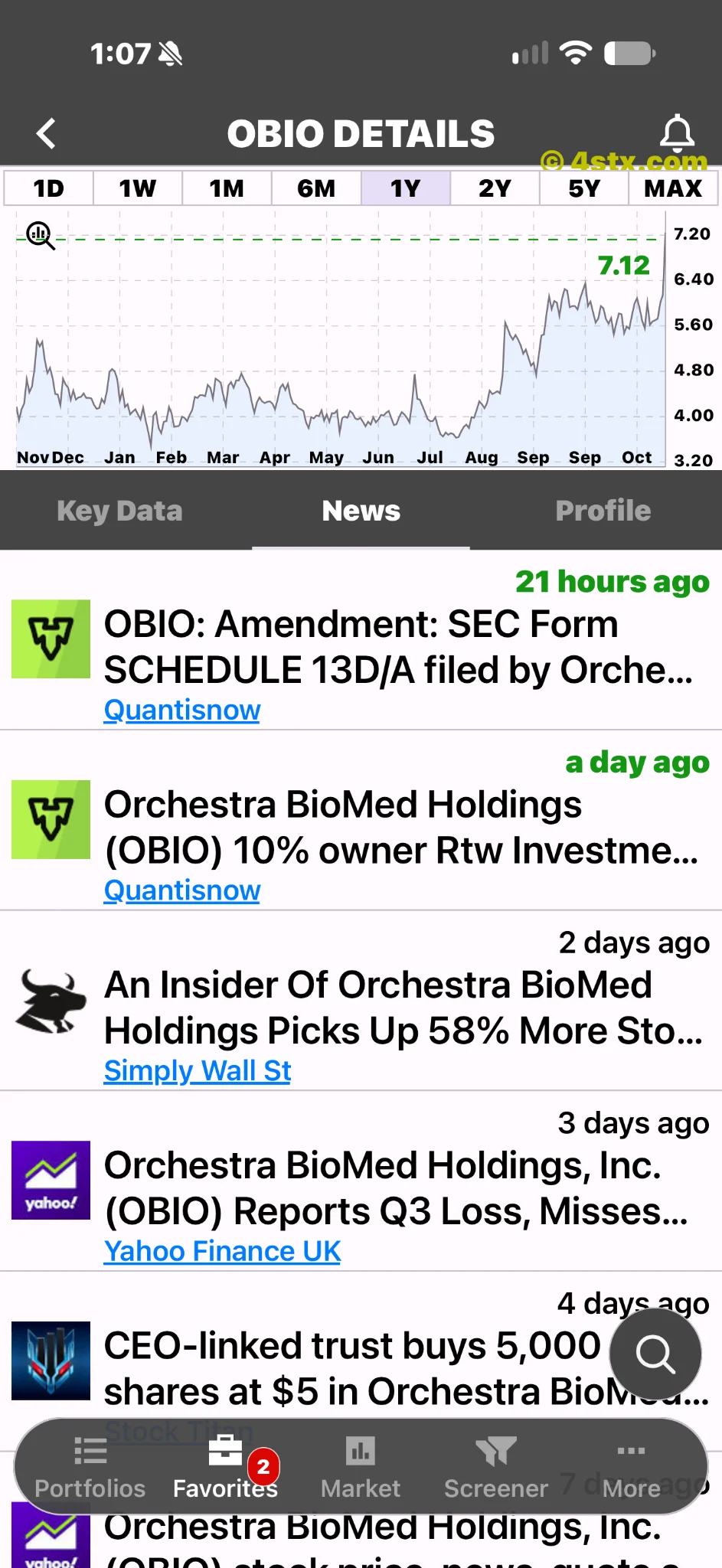
Orchestra reported earnings on November 10, three days before the screenshot, and scheduled its R&D Day for November 12. A financing closed November 9 with approximately $80.5 million in net proceeds. Management projected cash runway through 2028. Its BACKBEAT study completed enrollment with 349 randomized patients; planned data presentation and potential regulatory steps remain conditional, not evidence of approval. Quarterly results
The R&D event was listed for 3 p.m. Eastern on November 12, one day before this rally. Those announcements provide relevant context, but I did not verify a distinct November 13 announcement proving the precise reason for the move. R&D event
The encouraging part is time. A funded developer can work toward milestones without the same immediate pressure to raise cash again. The uncomfortable part is that money buys an opportunity to obtain answers, not the answers themselves. Additional shares also mean existing investors own a smaller percentage unless they participate. Financing can improve a company’s chances while still carrying a cost for each share.
More trading, but not a verdict on the science
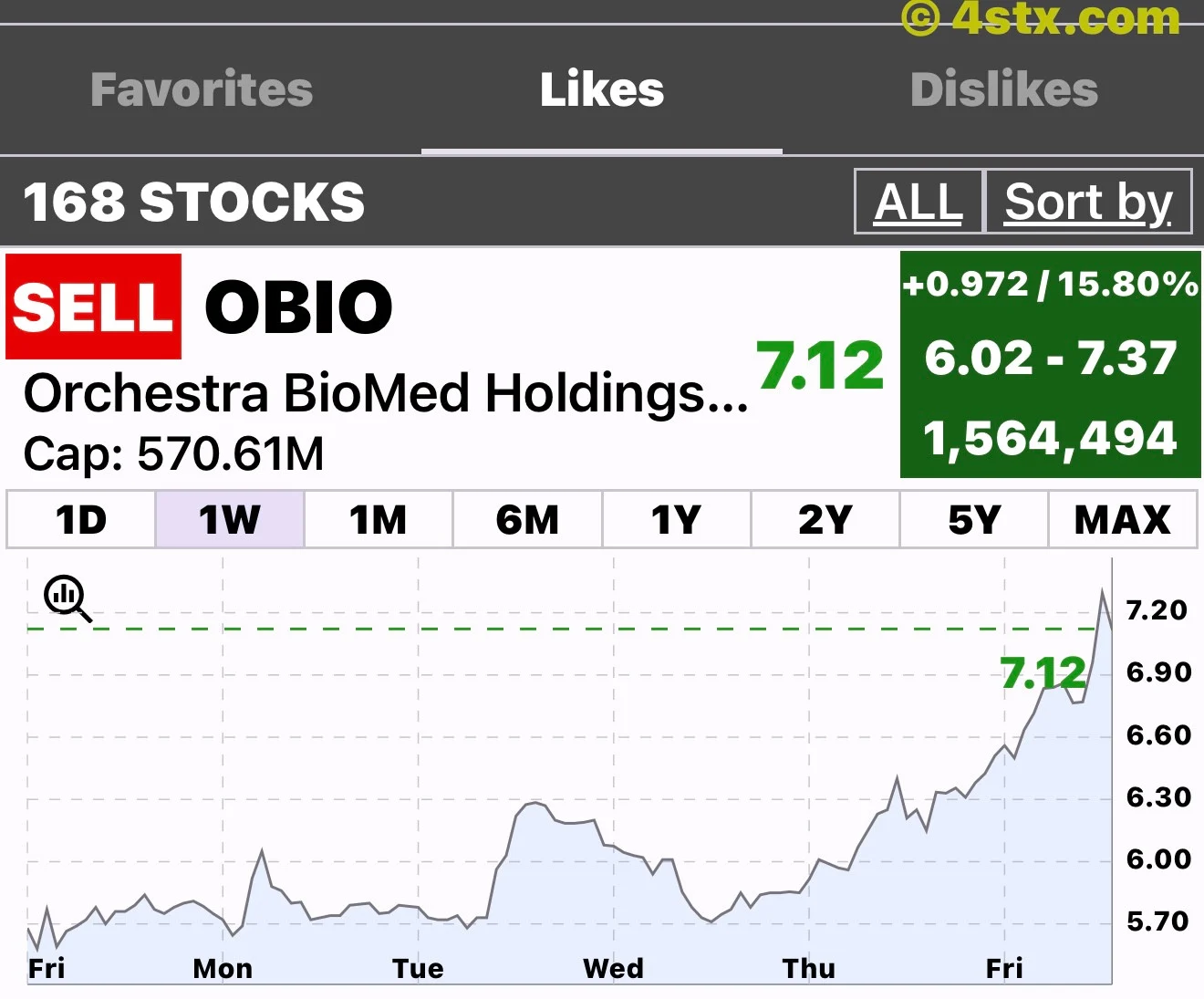
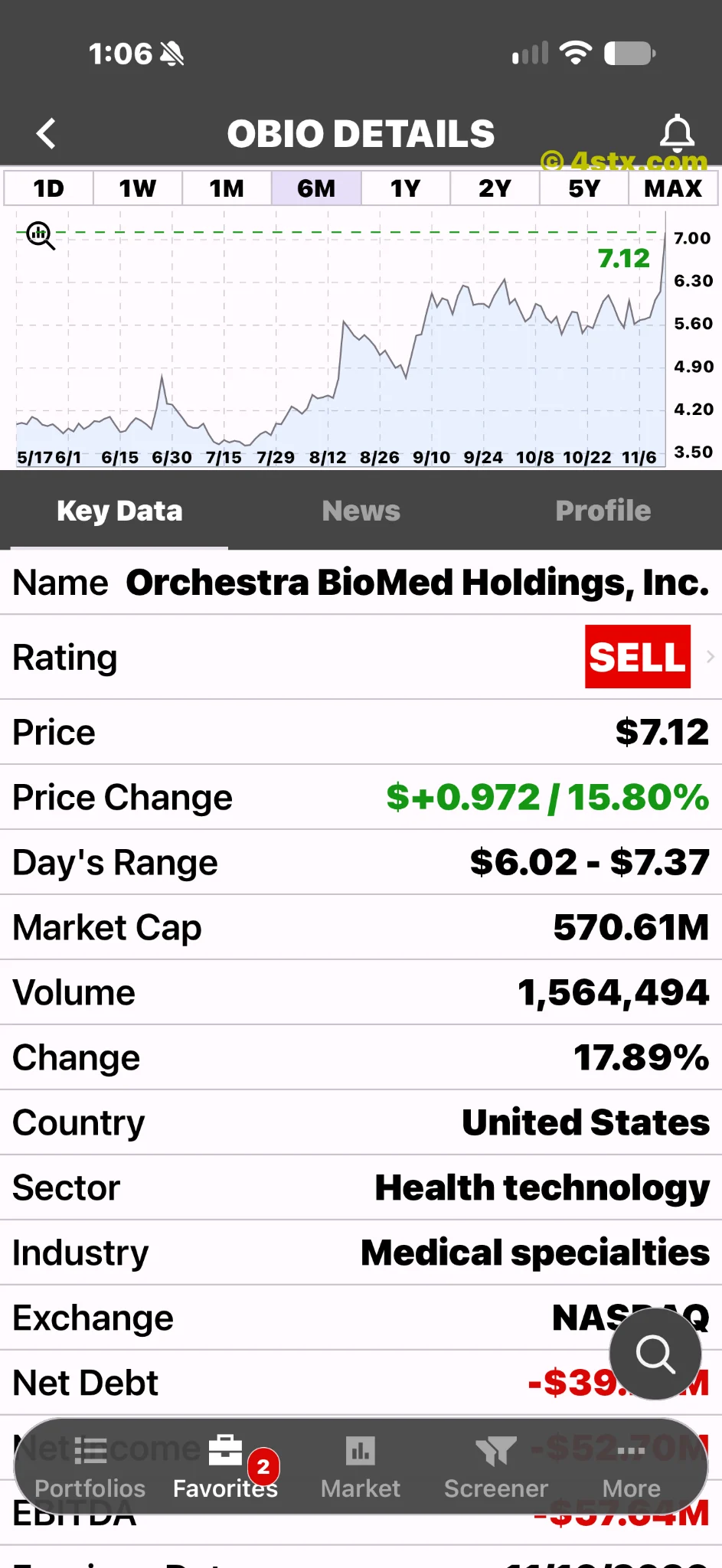
The newer November 13 StockRank weekly and details screenshots showed OBIO at $7.12, up +15.80% in the Price Change display, with 1,564,494 shares traded and a displayed range of $6.02–$7.37. The details screen’s separate Change row read 17.89%; that inconsistent field should not replace the price-linked gain or be treated as another verified return. Compared with the previously checked 20-day average of 501,895 shares, displayed volume was approximately 3.12 times a full-day average. These app snapshots are not independently verified closing figures. Trading statistics
That does not establish who bought, whether they were new shareholders or whether the rally will last. Nor does it make the app’s trading label a scientific assessment. A company’s clinical evidence and a stock’s short-term popularity answer different questions.
An uptrend with a new burst of speed
The six-month chart broadly rises: weakness around $3.50 in July gave way to an August step higher, followed by trading mostly around $5.50–$6.30 in September and October. The latest move to $7.12 extends that recovery. The one-month view was largely choppy and sideways before a brief early-November dip near $5, then a sharp rebound. Its newest leg therefore looks stronger than the preceding consolidation, consistent with an accelerating longer recovery. That describes the supplied chart, not a forecast or proof of clinical success.
Why conventional valuation needs care
P/E is not meaningful when earnings are negative. Stock Analysis listed a positive P/S, but its displayed market capitalization, revenue and ratio did not reconcile cleanly during this check. Rather than publish a falsely precise multiple, P/S remains unverified. Valuation data
Even a consistent sales multiple would need context here. A small revenue base can produce an enormous ratio without capturing the value investors assign to a successful future product. The reverse is also true: a promising pipeline does not eliminate dilution, execution or regulatory risk. “No meaningful P/E” is not another way to say cheap.
The practical distinction is between financing risk and development risk. They interact, but reducing one does not remove the other. Investors still need to judge whether forthcoming evidence supports the commercial opportunity and whether the eventual economics could reward shareholders after the capital required along the way. A well-funded experiment remains an experiment until its results answer the important questions.
A company-confirmed next earnings date was not verified. ATLAS and TipRanks estimates point to March 2027, roughly four months after this article, but disagree on the day. Investors should wait for confirmation. Orchestra’s story is now about what its better-funded runway can deliver, not a claim that Friday’s price surge has already proved success.