
Melar Acquisition Corp. I marketed no operating product before its merger. The special-purpose acquisition company had raised $160 million in gross proceeds from the sale of 16 million units at $10 apiece in June 2024. Those proceeds were capital raised, not customer revenue. Its November 16 filing showed no operating revenue, a $0.31 million net loss for the September quarter, $4.57 million in two loan balances and $43.50 million held as cash and securities in its trust account at September 30. Those figures describe the pre-merger issuer of the units, not the Italian grocery marketplace Everli. Everli disclosed roughly $16.7 million in its 2025 standalone net revenue and says it works with more than a thousand weekly active independent shoppers, who are not an employee count. Melar quarterly filing · Everli operating data · Company overview and closing release
We give the closing genuine weight but put little stock in the bundle’s farewell quote as a valuation of Everli. It prices a package buyers don’t get to keep. The stronger test begins when the share and warrant trade independently.
What an investor was actually seeing
MACIU represented a bundle: one Melar Class A ordinary share and half of a redeemable warrant. The $11.50 exercise price in the filing applied to a whole public warrant and was subject to adjustment; it was not a price for purchasing a unit. A warrant is a contractual right to buy stock on specified terms, not another share already owned, and its value can move differently from the share price. Neither the price of one of the components nor the unit’s original IPO price should be mistaken for a guaranteed amount the holder would receive at closing. Registered securities and warrant terms
Think of the package as a ticket and part of an upgrade option. A transaction that closes can raise the value people assign to both, especially if the share trades above the warrant’s exercise price. Their prices still do not have to move in step: the option’s time value and terms matter as much as its relationship to the share.
The move came as the unit reached its final session
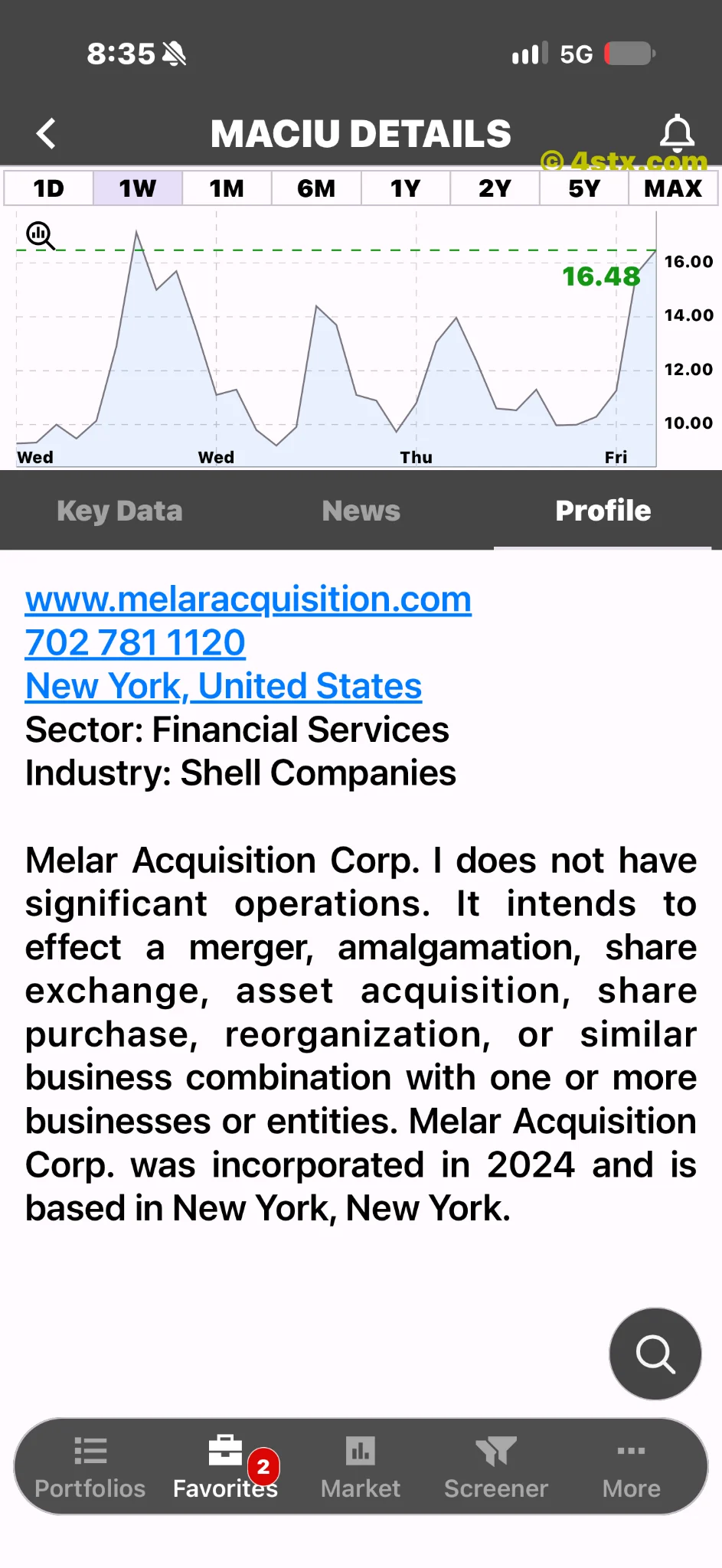
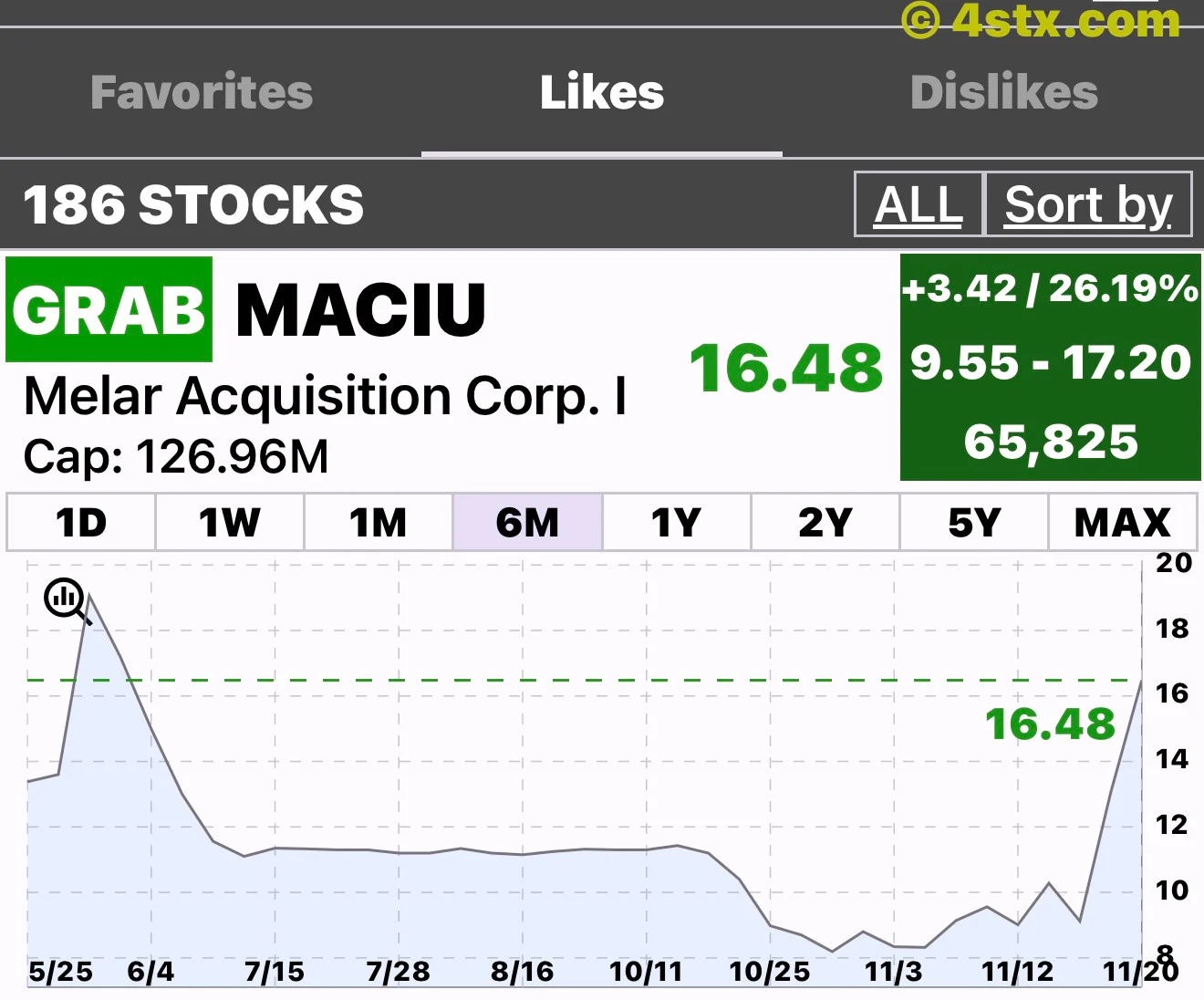
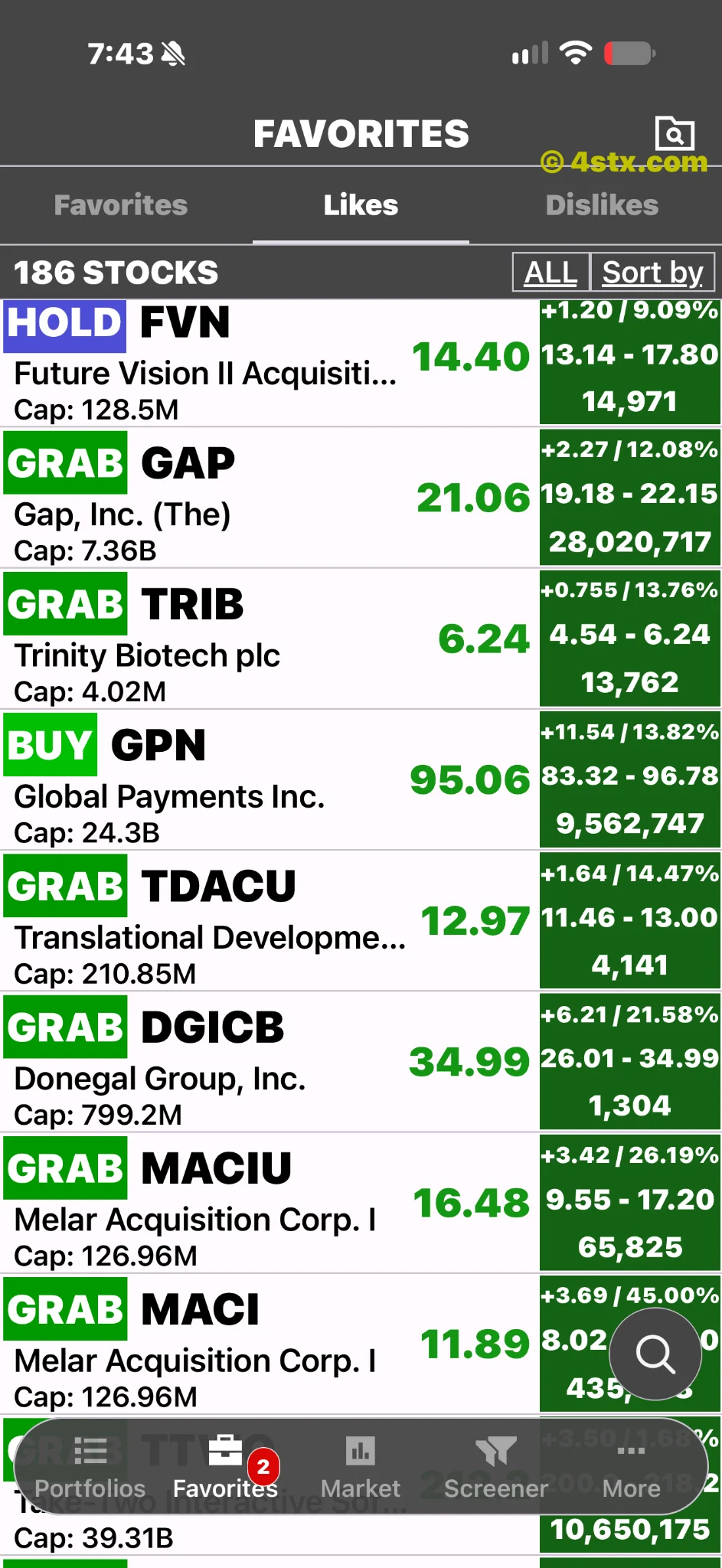
The StockRank snapshot reports $16.48, +26.19%, on 65,825 units. Everli’s market page independently reports $16.48 and +26.19%. Historical trading records show a $13.06 Thursday close and roughly 65,900 units for Friday, a modest volume discrepancy consistent with using different quote snapshots or feeds. That history also shows a rise from $9.12 on November 18 to $13.06 the next day, so the Friday quote followed an already volatile week. The supplied screenshot has no six-month chart, and a comparable six-month trend and a reliable same-coverage average-volume baseline were not verified. Issuer quote · Unit trading history
The bullish reading deserves more than a footnote. Closing removes a risk investors had been paid to bear, and a sharp revaluation is entirely plausible. But the last unit quote cannot tell us whether buyers finally liked the grocery business or were mostly paying for the optionality wrapped around it. The two stories matter differently after the split.
The genuine news was the November 20 completion of the Everli merger, following shareholder approval on October 22. The exact reason the bundle last traded where it did cannot be established from the filing or the closing quote. The timing makes the corporate action the clearest context, but the observed price does not disclose how buyers valued the separate components, which trades set the quote or whether the last quote could be repeated in size. Shareholder approval
What happens after closing
Everli said outstanding units would automatically separate into their component Class A common stock and warrants. Nasdaq identified November 23 as the effective date for suspension of unit trading and the component symbol changes to EVRL for the shares and EVRLW for the warrants. There is no successor ticker for the old bundle. That makes the final unit price a historical reference, not a Monday opening price for any one component. A standard P/E or P/S for the unit would also be misleading: it mixes a share and a partial warrant, and the pre-merger issuer had no operating sales and a loss for the quarter. No next earnings date for the public operating business was verified. The practical distinction for readers is between the end of trading in a bundle and the continuing existence of the securities into which it separates. Nasdaq notice
The comparison I’d trust is the separately traded share plus half the separately traded warrant, using quotes from the same moment and checking whether both have enough liquidity to make the comparison useful. Closing that gap is a trading observation. For an argument about the grocery business itself, cash economics per order and repeat customer demand would be better evidence.
Keep the unit and the common share separate when checking the charts. Download StockRank, open the historical one-week chart for MACIU, and compare it with the common-share chart for the same week to see whether they moved together into the merger.
Which price would you trust first: the share or the bundle?