
Gossamer Bio is a clinical-stage drug developer trying to turn seralutinib, an experimental treatment for pulmonary hypertension, into a commercial medicine. Its September 2026 quarter produced $38.4 million of collaboration revenue and a $48.1 million net loss, according to its November 10 results. At September 30, convertible-note principal totaled $84.122 million, versus $51.2 million in cash and marketable securities. This is not a mature pharmaceutical business enjoying a sudden surge in prescription sales. It is a company whose next regulatory step could change both its prospects and its access to funding.
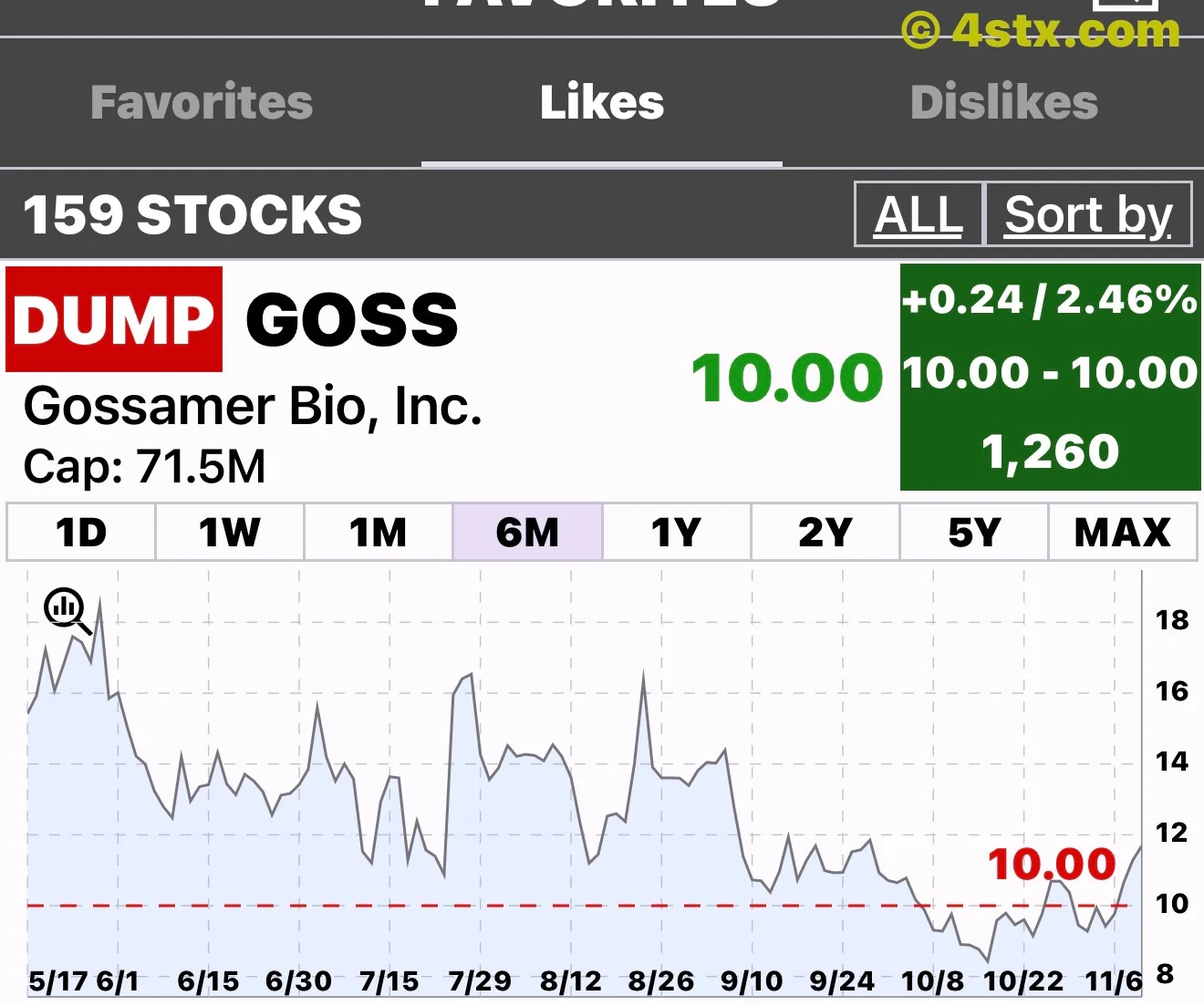
The individual November 12 StockRank chart shows GOSS at $10.00, up +2.46%, whereas the earlier watchlist showed $11.69 and 19.77%. These are different app snapshots, not interchangeable prices or verified closes. The change is a useful reminder that an exciting percentage can fade before the underlying investment questions are answered. The strongest recent company disclosure is the November 10 financial and development update. It supplies a plausible backdrop for renewed attention, but does not prove that every buyer acted on the same news or that a new FDA decision occurred that morning.
One decision, two consequences
The important distinction is between submitting an application, having it accepted for review and receiving approval to sell a medicine. Those are separate events. Gossamer announced its seralutinib application in September. Its November update still described the agency’s initial filing decision as pending and the medicine as investigational.
Acceptance matters unusually much here. An August financing arrangement could deliver approximately $125 million at a second closing if the FDA accepts the application in 2026 and other conditions are satisfied. A separate approval-linked warrant component could bring further cash, but depends on approval and exercise. Potential money is not money already in the bank. Readers should resist adding all the advertised financing amounts to today’s cash balance.
That structure helps explain why a seemingly administrative milestone can command so much attention. For a small developer, an accepted application can improve the path toward a commercial product while also satisfying a financing condition. Conversely, a disappointing decision could damage both timelines at once. The investment case therefore contains linked risks, not two independent sources of safety.
A revenue increase deserves a second look
The quarter’s collaboration revenue should not be mistaken for evidence that patients are buying seralutinib. The latest release attributes much of the increase to accounting associated with ending the Chiesi collaboration and recovering worldwide rights. There is strategic appeal in controlling an asset more broadly, but control also leaves the company responsible for advancing that opportunity.
The filing’s going-concern warning deserves at least as much attention as the percentage gain on the screen. In plain English, the company disclosed uncertainty over its ability to finance continued operations. That warning does not predict a specific outcome, but it is incompatible with treating the rally as proof that the financial problem has disappeared.
What would make the recovery more convincing?
A useful checklist begins with an official filing-acceptance announcement, the actual completion of conditional financing and subsequent regulatory progress. Shareholders also need to watch financing terms: raising money can keep a program alive while increasing the number of claims on future success. A higher share price alone answers none of those questions.
The six-month chart generally slopes downward from its spring highs toward autumn lows. The latest month shows a partial rebound, not an established reversal of that broader decline. Its historical line and current quote do not end at the same level, so they should not be treated as perfectly synchronized. Gossamer also completed a one-for-80 reverse split in September; exact historical returns require a consistently adjusted price series.
The constructive reading is that investors see a possible route through a difficult financing and regulatory period. The uncomfortable reading is that much of that route still depends on events outside shareholders’ control. GOSS is an interesting recovery story precisely because the stakes are high, not because the outcome is settled.