
Enovix makes advanced lithium-ion batteries for devices where space, weight and energy matter, from smart glasses to drones. It is still a small commercial business carrying a much larger development ambition. Its November 12 report showed quarterly revenue of $11.04 million and a $41.95 million net loss attributable to Enovix for the period ended October 4, 2026. That imbalance is the starting point for understanding the stock: investors are buying an expansion story, not an established earnings machine. (Enovix quarterly report, November 12)
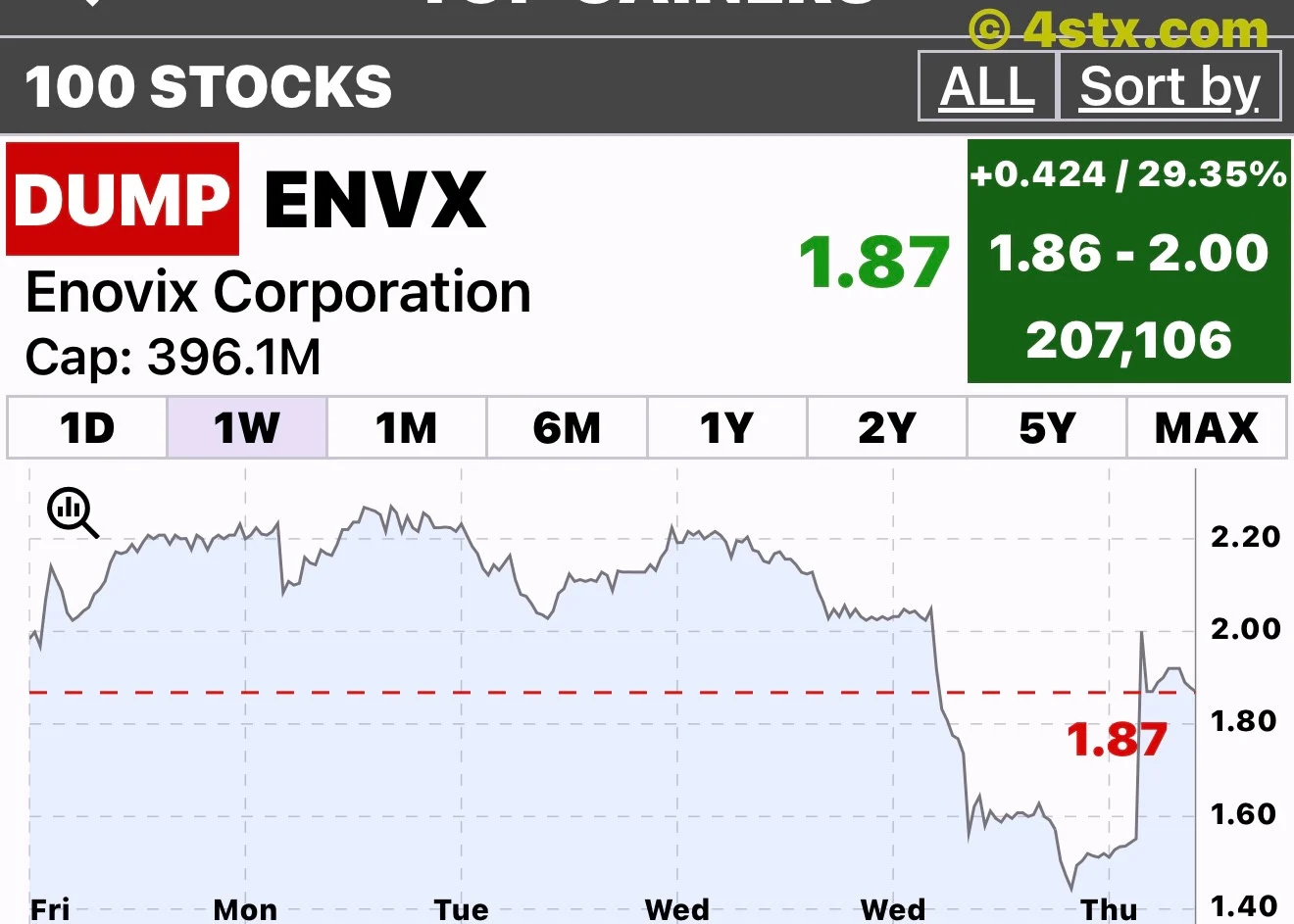
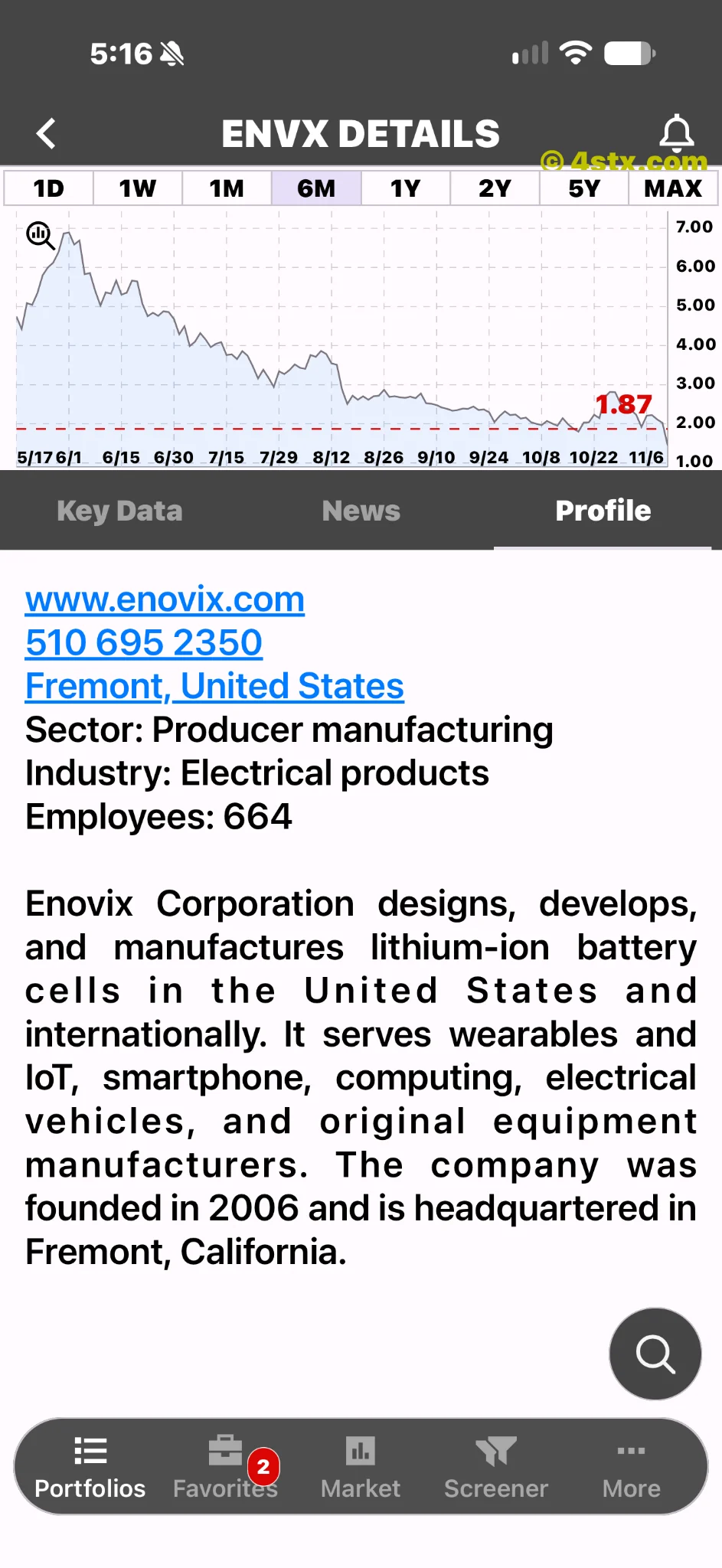
The November 13 premarket StockRank screenshot showed ENVX at $1.87, up +29.35%. That is an observation from the supplied screen, not a verified opening price or a promise the gain survived into regular trading. More importantly, the move should not be presented as an uncomplicated celebration of earnings. Investing.com's November 12 coverage reported a sharp selloff despite higher revenue. The next morning's bounce belongs in that unsettled context. (November 12 market coverage)
A rebound with two competing explanations
The constructive interpretation is that investors are reconsidering what the battery maker can sell sooner. The company is directing attention toward drones and smart eyewear after a smartphone-development setback. For a technology supplier, that distinction matters. A technically ambitious product can attract attention for years without generating enough commercial demand to support the organization built around it.
Moving toward customers with nearer-term needs can therefore be sensible. But a change of emphasis is not, by itself, proof that the economics work. Investors need to see repeat orders, reliable deliveries and production costs that leave room for corporate expenses. A smaller market with dependable economics may be more valuable than a larger opportunity that repeatedly slips into the future.
The less comfortable interpretation is that this is a volatile recovery trade following a damaging repricing. A large percentage gain from a depressed base does not establish that the underlying disagreement has been settled. Neither the screenshot nor the earnings release identifies who bought shares that morning. Calling the move a confirmed short squeeze, or attributing every purchase to one announcement, would go beyond the evidence.
Debt relief helps, but it is not operating success
At October 4, Enovix reported $11.65 million of short-term debt and $521.87 million of long-term debt, net. After quarter-end, it retired $128 million face value of its 2030 notes for about $81.4 million. The remaining $232 million of those notes is not its entire debt balance; a separate 2028 issue also exists. These figures come from the November 12 company report. (Company disclosure)
Buying debt below face value can improve the capital structure. It does not make battery production profitable, and the cash spent is no longer available for manufacturing investment or operating losses. That is why an investor should separate financing gains from evidence of a healthier operating business.
November 13 is also the record date for a warrant distribution. That calendar event is relevant context, not a demonstrated cause of the rally. A warrant represents a conditional right to purchase shares, not free cash generated by customers. (Company disclosure)
What would make the rebound more convincing?
The test is whether subsequent results show commercial progress without another widening gap between promises and delivery. Watch realized sales, cash consumption and customer execution together. None is sufficient alone: growing sales can still consume substantial capital, while lower spending can reflect retrenchment rather than stronger demand.
The supplied six-month chart shows a clear downtrend: an early peak near $7 gave way to lower levels through summer and autumn. The latest month briefly recovered toward the upper-$2 area before slipping again, so it looks like a failed bounce within the broader decline rather than a sustained uptrend. The one-week chart makes the latest drama clearer: a fall from above $2 toward roughly $1.45 was followed by a rebound toward $1.87. That recovery is meaningful, but still below earlier weekly levels. The charts support describing a rebound, not declaring a completed turnaround.