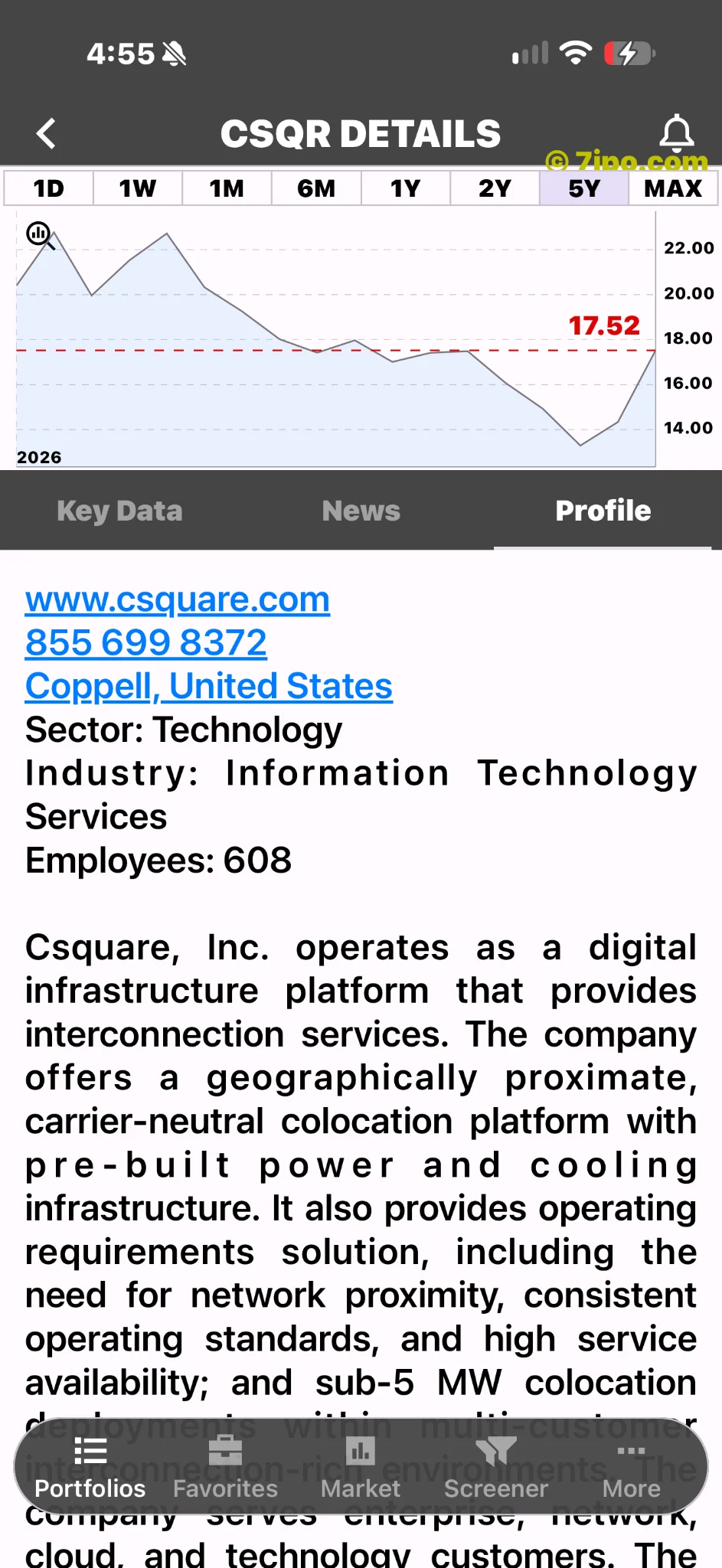
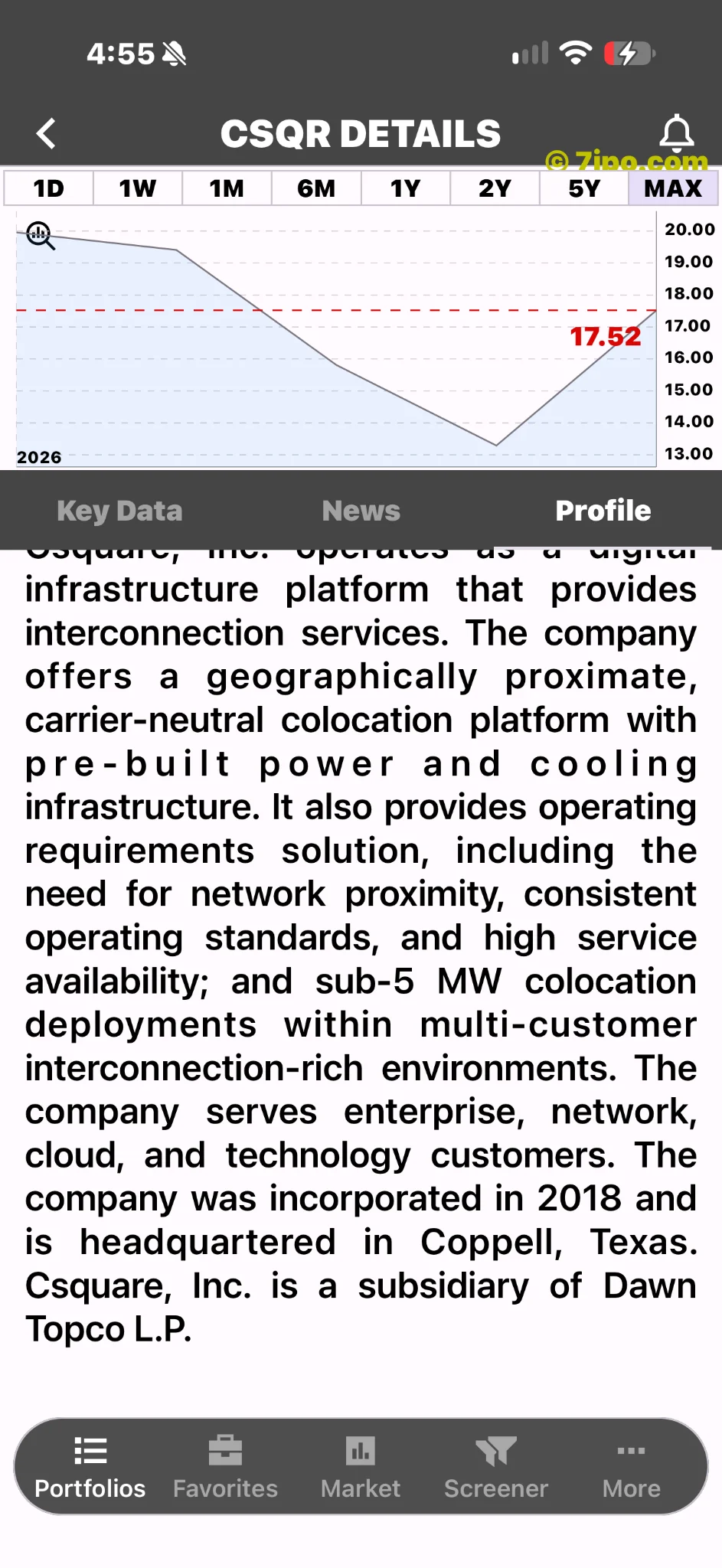
Csquare provides data-center colocation and interconnection infrastructure. It reported 608 employees as of March 31, 2026, and revenue of $302.3 million for the quarter ended September 30, 2026. Those figures establish an operating business, not just an AI-infrastructure concept. SEC workforce disclosure; quarterly results.
What is behind the attention?
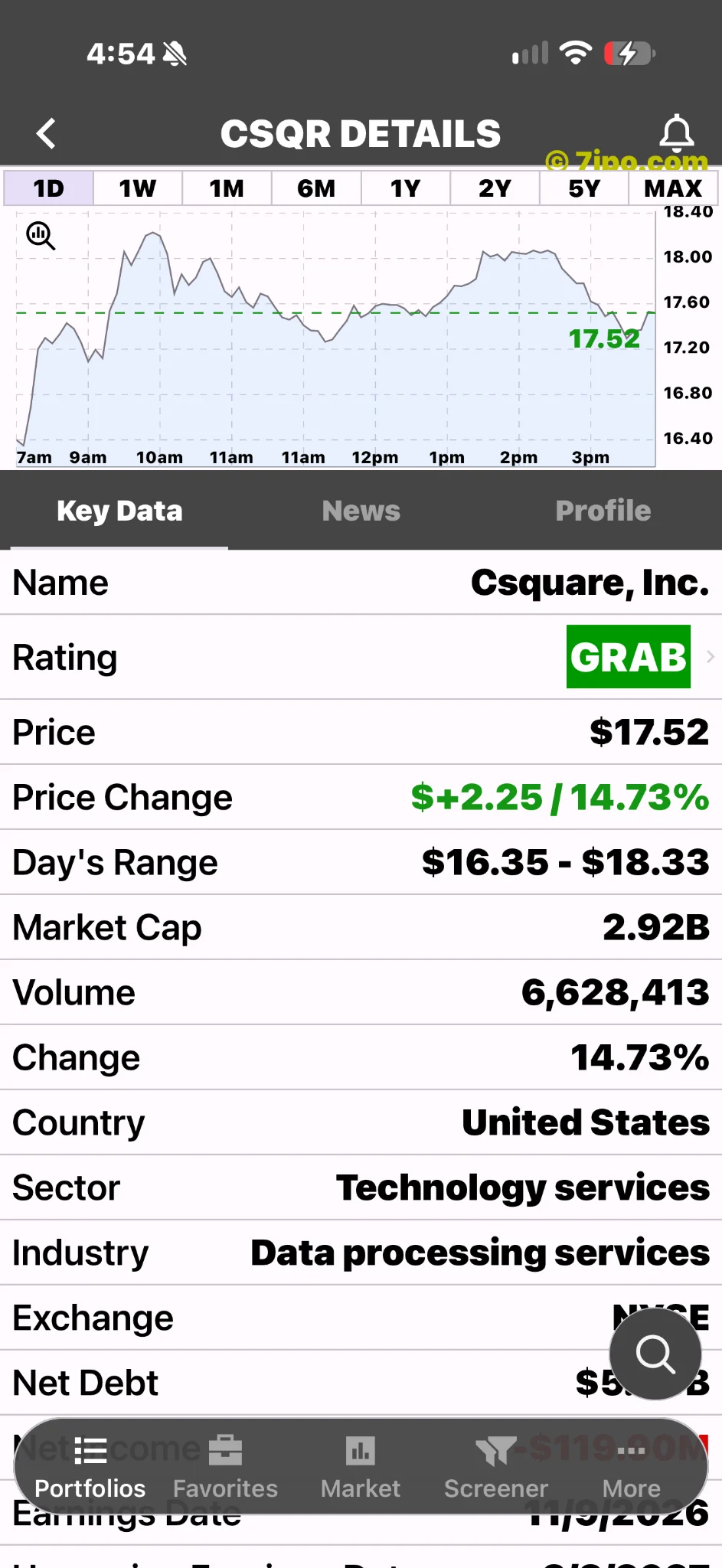
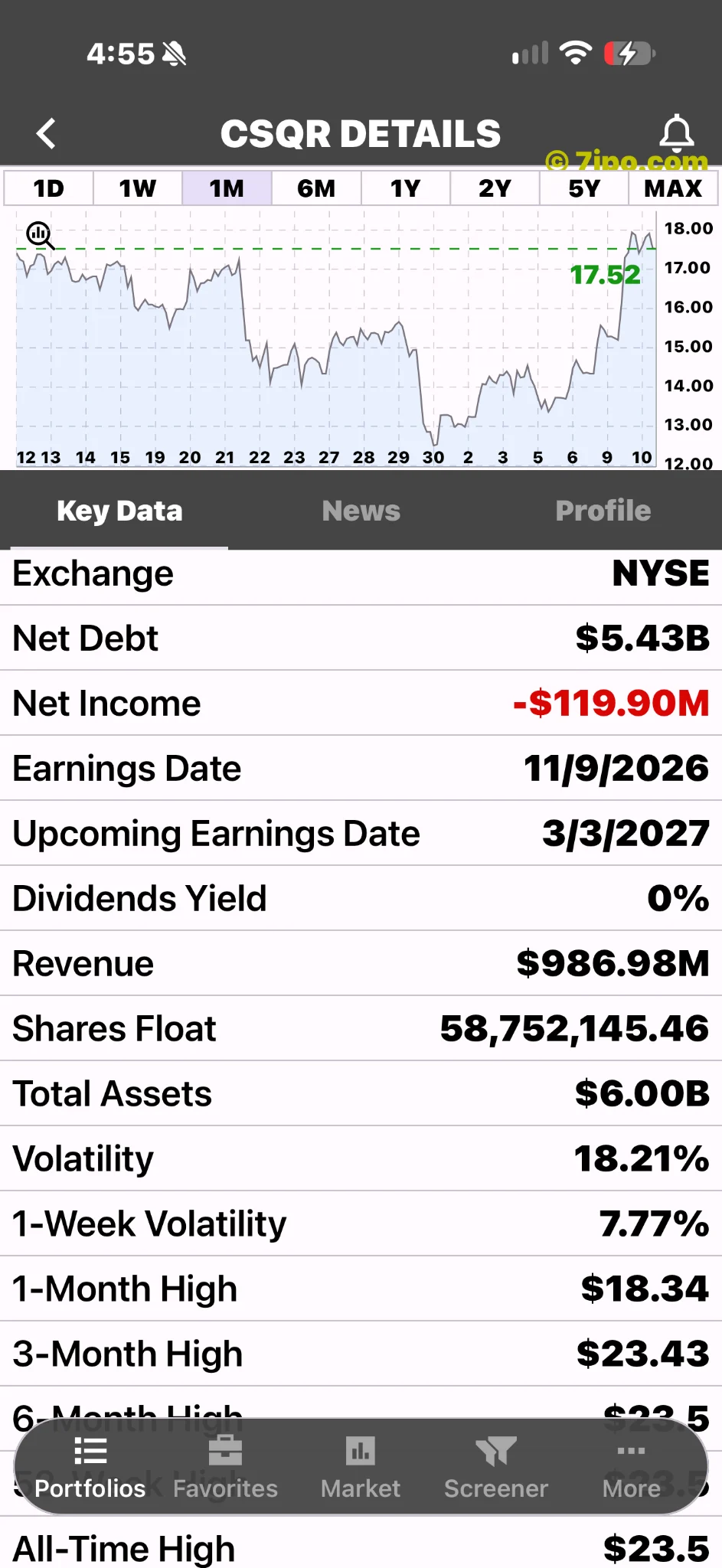
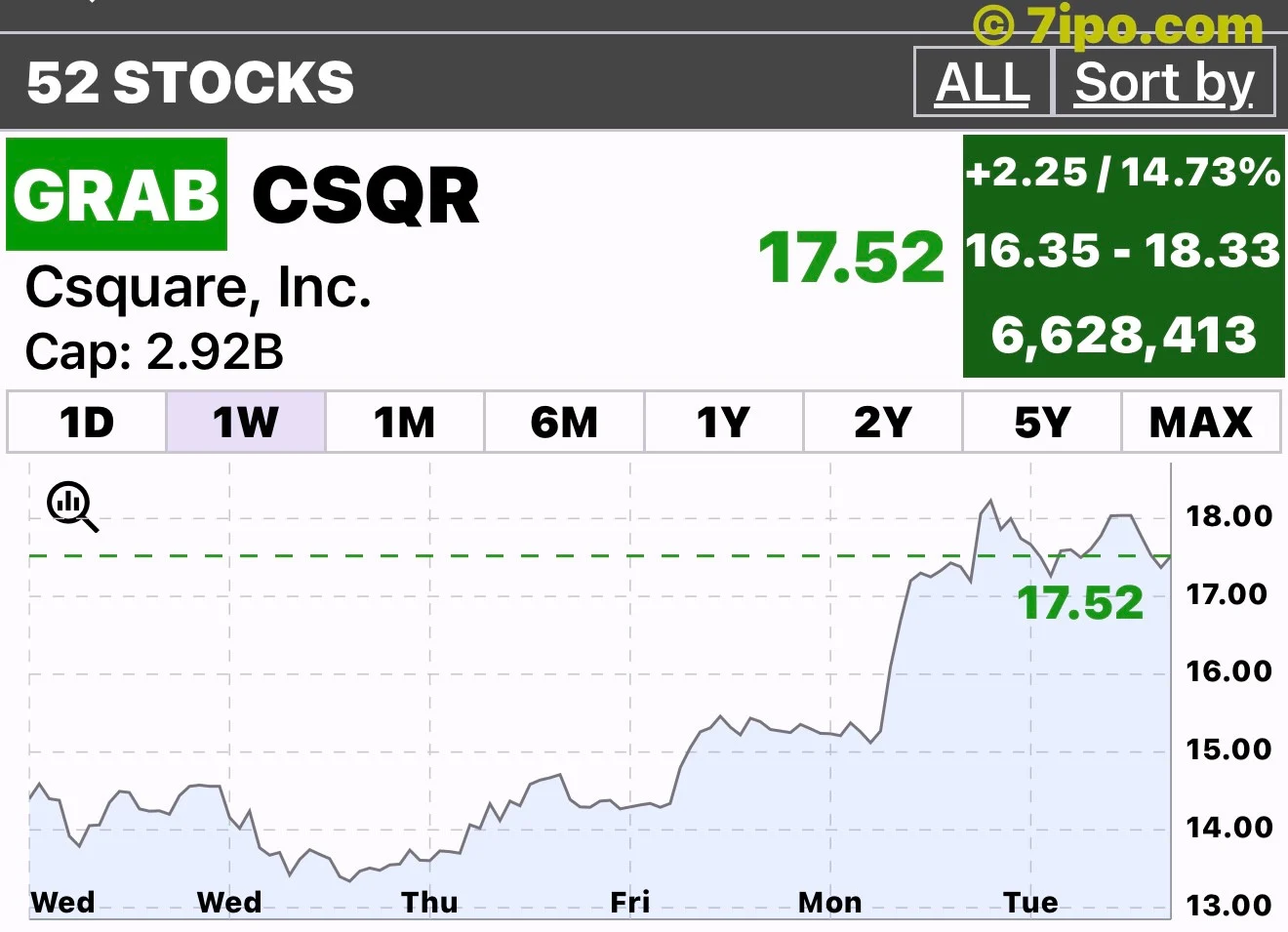
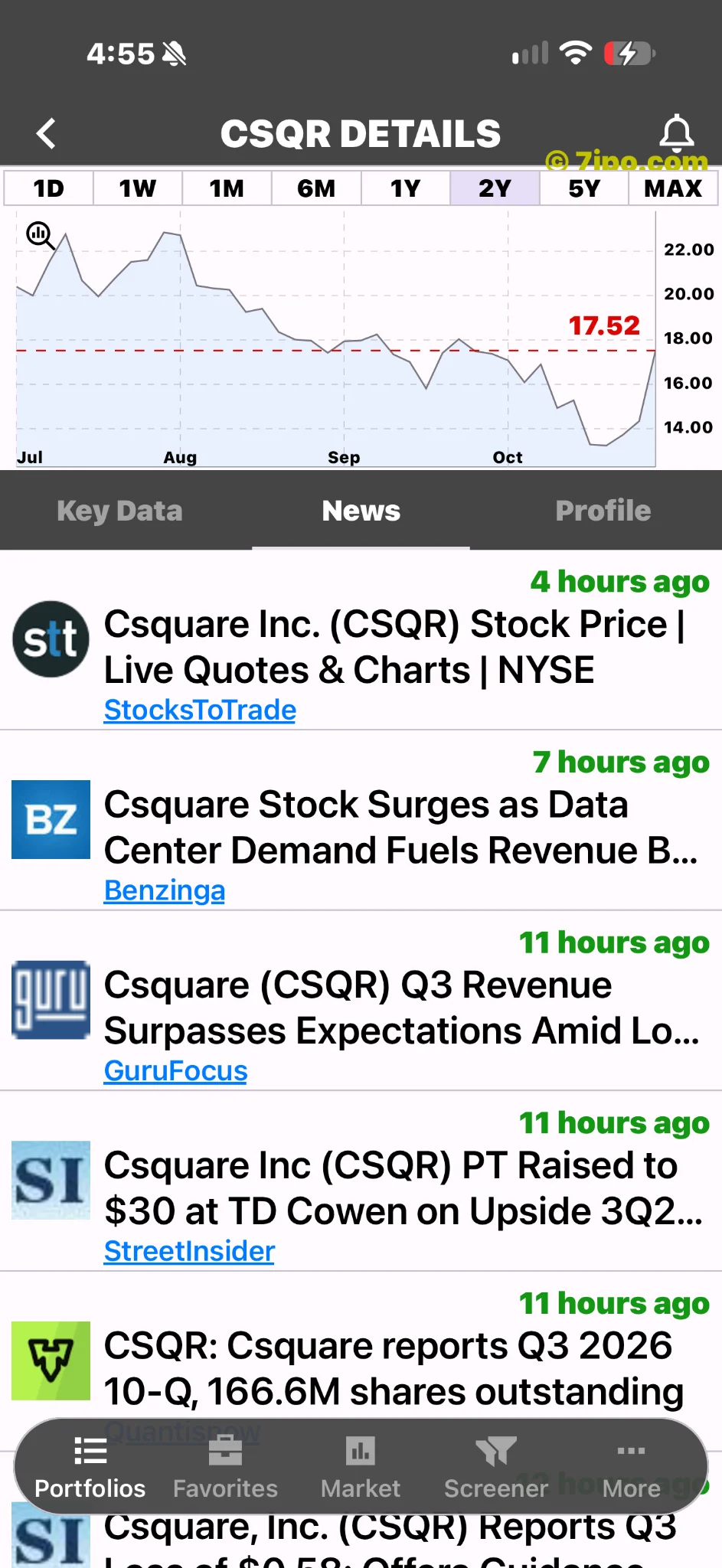
The supplied chart displays CSQR at $17.52, with a quoted gain of 14.73% and a market capitalization of approximately $2.92 billion. These are screenshot values, not a newly verified live quote. The capture date, time zone and closing status are unknown; selecting “1W” does not turn the quoted percentage into a weekly return.
The November 9 earnings release offers concrete context: third-quarter revenue rose 25.6%, bookings reached $66.1 million, and management raised its full-year adjusted EBITDA outlook to $490 million–$500 million. However, the quarterly net loss widened to $88.1 million, including IPO-related costs. Company results.
That combination makes the interesting question more demanding than “are data centers popular?” It is whether signed demand can become durable cash generation. Adjusted EBITDA is not net income or free cash flow. The results are relevant context, but an undated screenshot cannot prove that this announcement caused its displayed move.
A rebound is not yet an IPO recovery
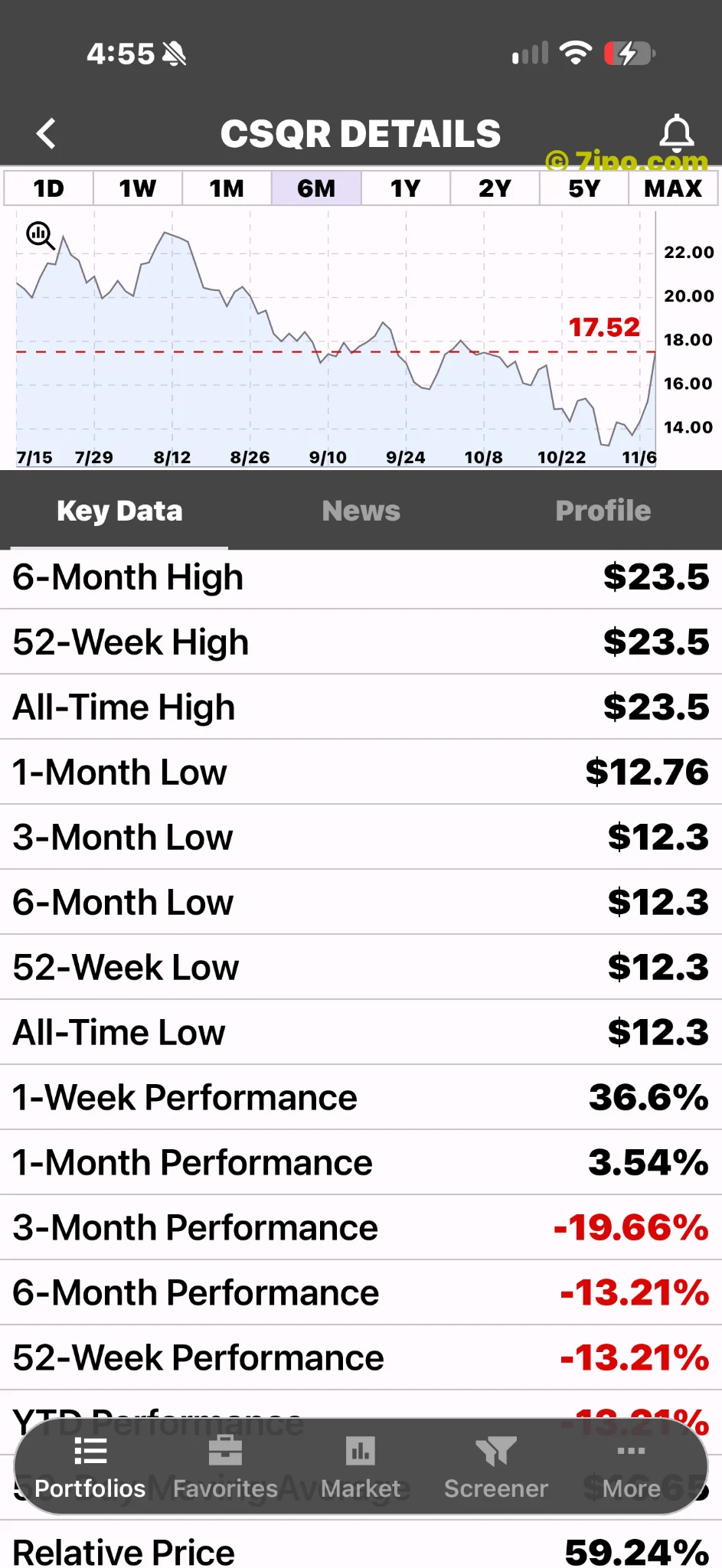
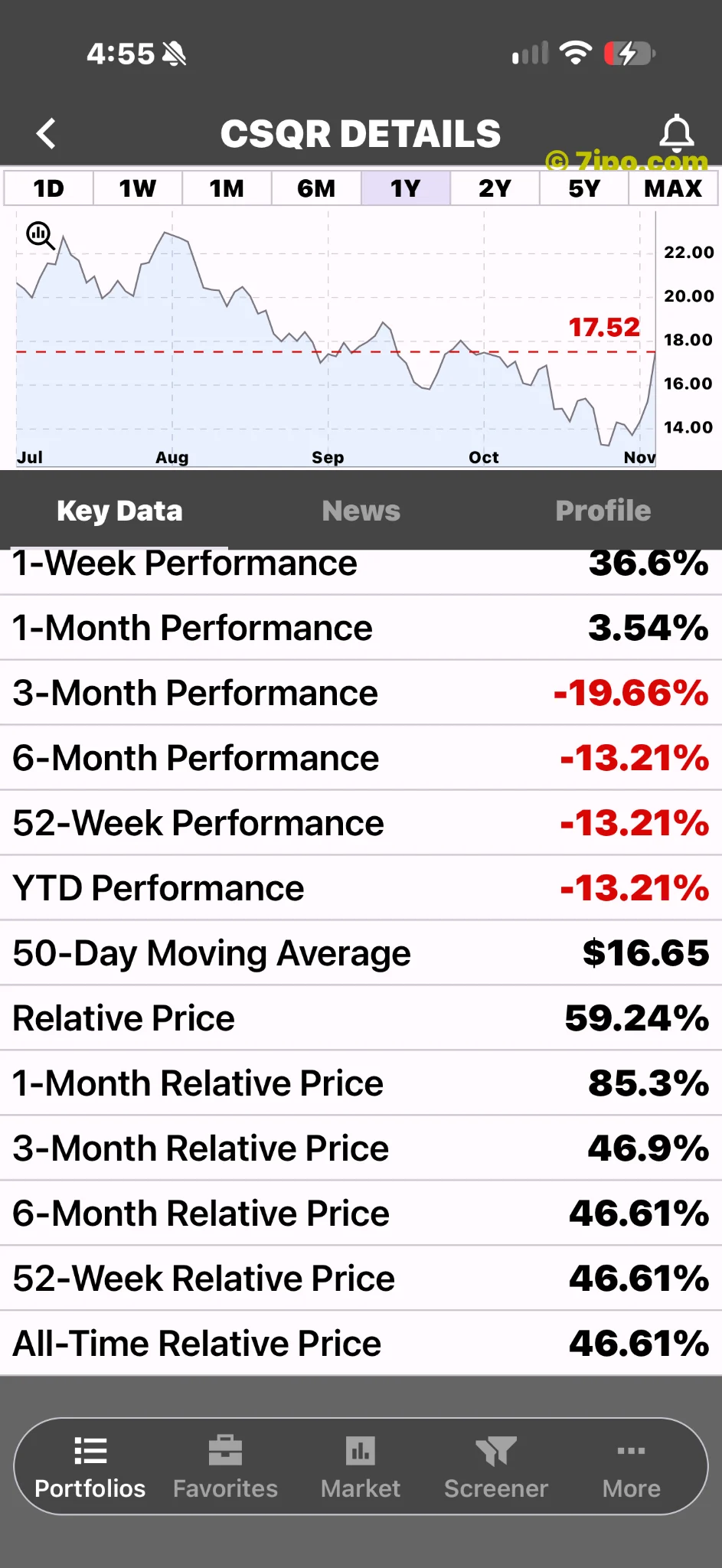
Csquare priced its July 2026 IPO at $21 per share. The supplied $17.52 quote is approximately 16.6% below that level, calculated directly from the two prices. A strong green reading and an unrecovered IPO investment can therefore coexist. IPO pricing announcement.
The next reporting periods should be judged on execution, not just enthusiasm: how much contracted demand becomes revenue, and what remains after the cost of delivering it? That is an analytical framework, not a forecast of the stock’s next move.
Read the operating numbers in the right order
Bookings, reported revenue and cash are different checkpoints. A signed agreement can signal future business, but it should not be counted as cash already available to shareholders. Revenue records activity under accounting rules; cash generation also reflects when customers pay and when the operator funds its facilities. Comparing these measures side by side is more useful than treating any one of them as a complete verdict.
For this story, the raised adjusted earnings outlook is a management forecast rather than a completed result. The relevant follow-up is whether subsequent reports support it. A stronger forecast can improve expectations while still leaving execution risk unresolved. Similarly, a quarterly loss and improving operating indicators are not mutually exclusive. Readers should examine the adjustments rather than assuming either headline settles the debate.
Keep the price comparison honest
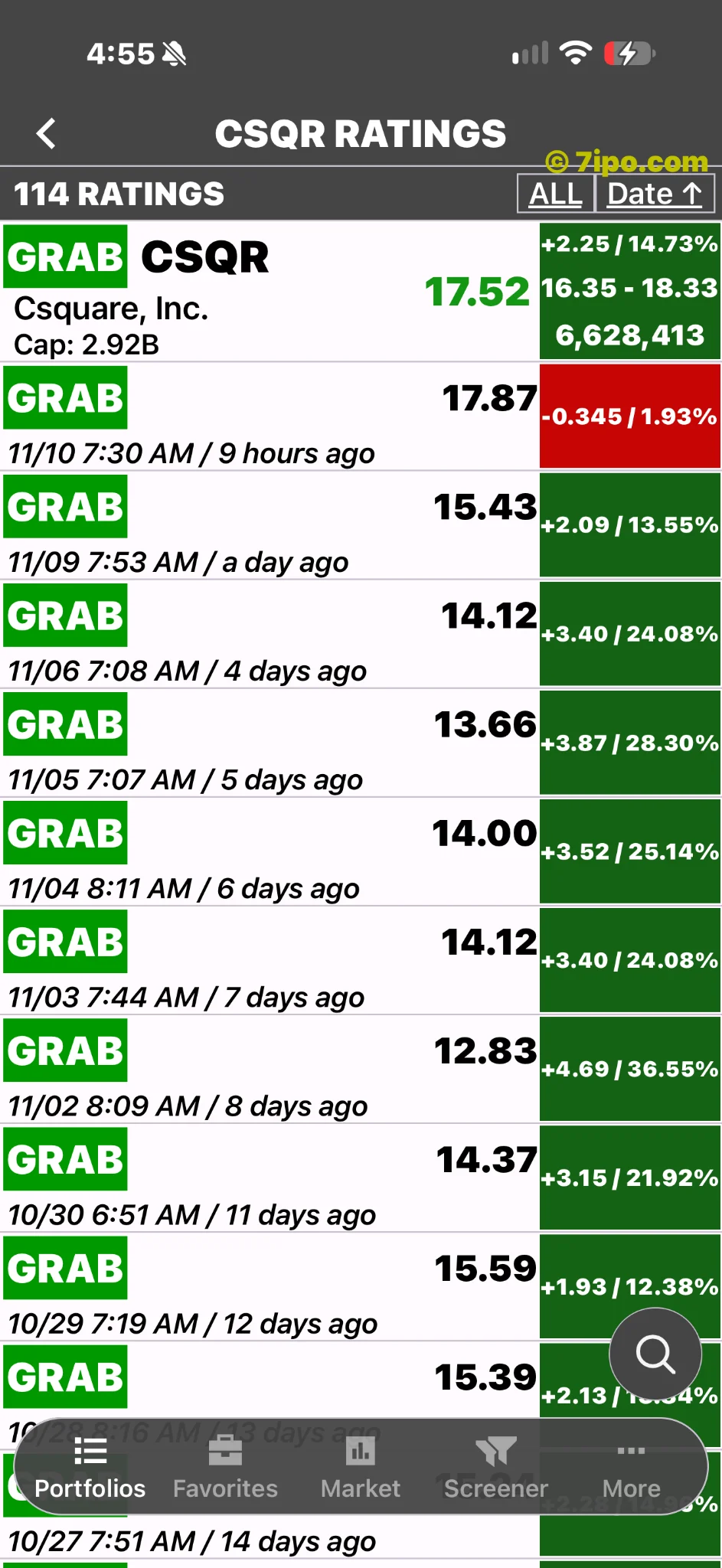
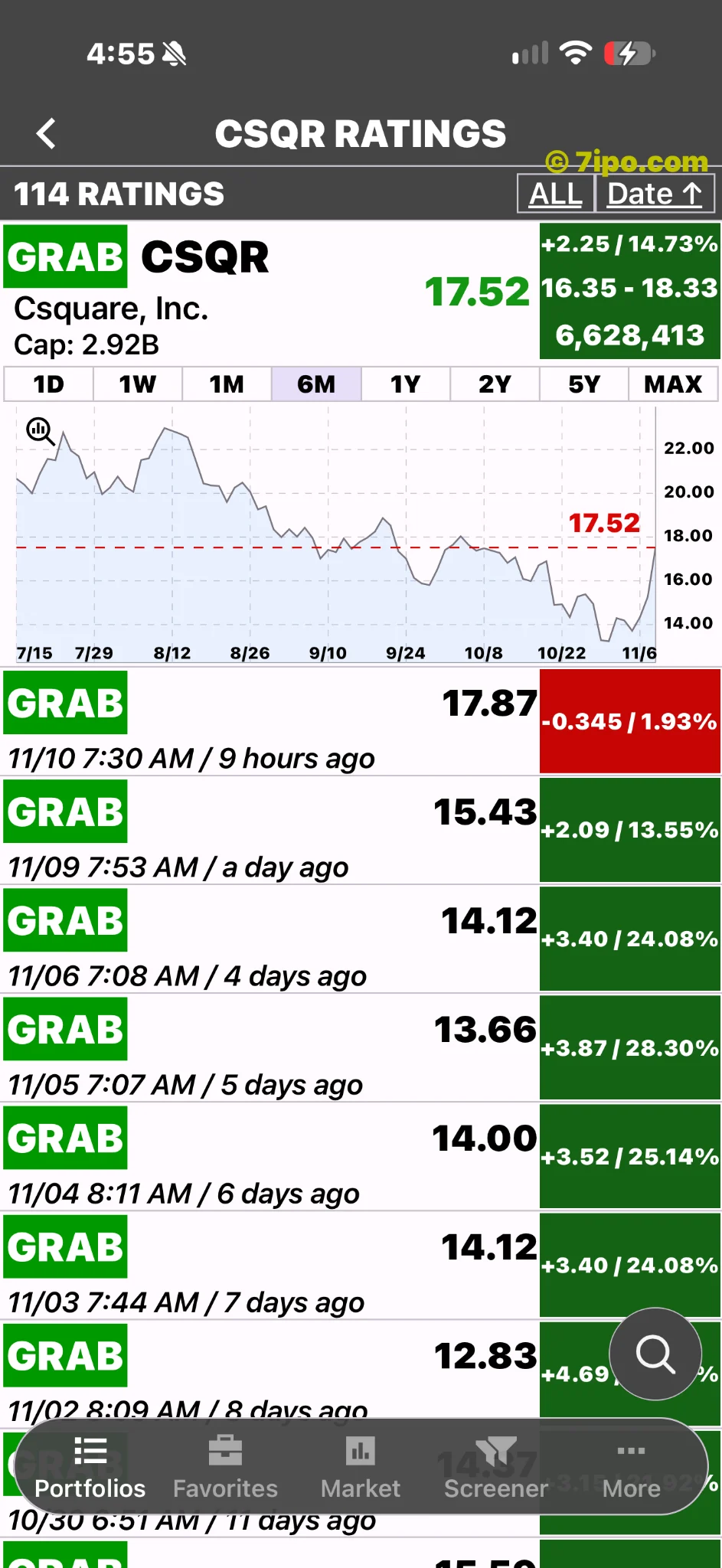
The 16.6% gap uses the offering price as a benchmark, not the first exchange trade, an investor’s actual purchase price or a total-return calculation. It excludes fees and any other investor-specific effects. Someone who bought at a different price has a different result.
The screenshot is useful because it preserves what was displayed. It cannot establish what happened before or after capture. A responsible interpretation separates three things: the visible quote, the dated company announcement and our assessment of the business. That separation leaves an interesting story intact without claiming a causal link the available evidence cannot establish.
Follow the chart context in IPO-Stocks.app. Screenshot provenance: ©7ipo.com. Informational analysis, not a personalized investment recommendation.