
Cumberland Pharmaceuticals is a small drug developer reshaping itself around treatments for rare diseases rather than its former commercial-product business. For the quarter ended September 30, 2026, it reported $2.16 million in revenue and a $1.12 million loss from continuing operations, despite a much larger $77.8 million overall net profit. Its September balance sheet showed $80.6 million in cash and no outstanding revolving-credit balance. Those numbers introduce the central question behind this rally: what can Cumberland build with its newly strengthened finances?
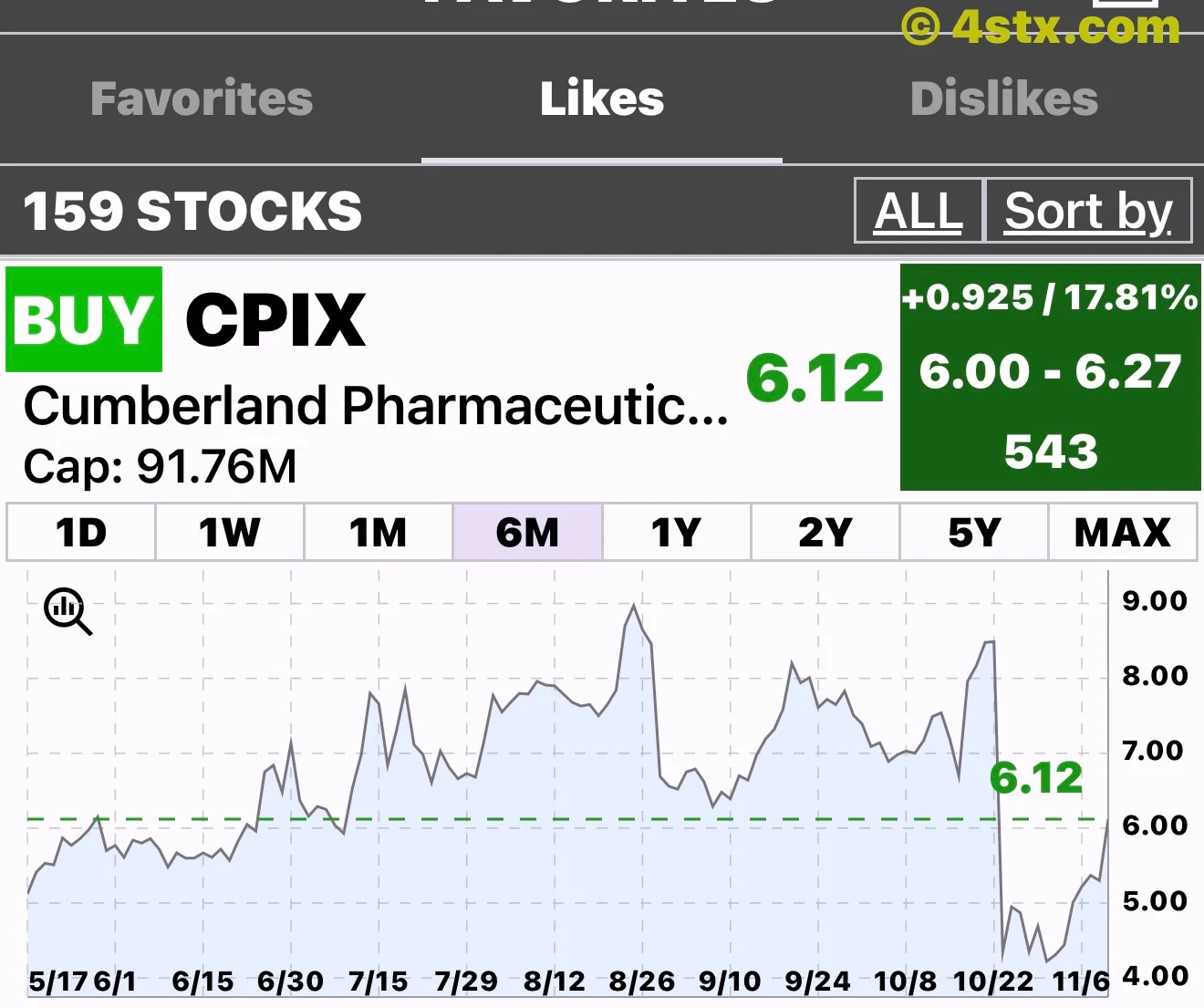
Eric’s November 12 StockRank snapshot showed CPIX at $6.12, up +17.81%. The clearest recent company news is its November 10 financial update, which brought its strategic reset and drug-development plans back into focus. That timing provides a credible explanation for renewed interest, not proof that every buyer was responding to the same announcement. The screenshot is a price observation, not an audit of investors’ motives.
A profit that needs a second look
The headline profit is real accounting income, but it is not evidence that Cumberland’s remaining operations suddenly became a highly profitable pharmaceutical franchise. The company sold its commercial brands and organization to Apotex in a transaction that closed July 1, receiving $100 million at closing. The disposal gain drove the reported quarterly bottom line. Continuing operations still lost money.
That distinction matters more than an eye-catching earnings number. A business can sell an asset once; it cannot automatically repeat the same gain next quarter. Investors evaluating a sustainable turnaround should separate proceeds from a transaction, recurring revenue, and the future cost of developing a medicine. Treating those three things as interchangeable would make the story simpler, but less useful.
The cash does improve the starting position. Development-stage companies often have to choose between advancing a program and raising capital on unfavorable terms. A stronger balance sheet can give management more options. It does not eliminate spending, execution risk, or the possibility that future financing will eventually be necessary. Nor does a zero revolving-credit balance mean that all liabilities disappear: the September accounts included other obligations.
A regulatory path, not a regulatory victory
The more consequential opportunity is ifetroban, which Cumberland is developing for heart disease associated with Duchenne muscular dystrophy. In its October 26 update, the company said it planned to submit a new drug application following discussions with the FDA. The agency permitted a rolling review, allowing completed sections to be sent before the entire application is ready.
That is encouraging procedural progress, but it must be described precisely. Permission to submit sections is not approval to market a treatment. It also does not establish that the complete application has been submitted, accepted for filing, or judged sufficient. Cumberland’s earnings-call discussion anticipated separate announcements for the start and completion of the rolling submission. Readers should watch for those actual milestones rather than mentally advancing the program beyond its documented status.
For shareholders, this creates a different investment test from the one posed by a mature medicine seller. The question is whether clinical evidence, manufacturing work and regulatory execution can convert a promising program into an approved product. Cash buys time to attempt that conversion; it cannot decide the scientific outcome.
What would make the rally more convincing?
The constructive part of this story is the combination of resources and a more focused objective. The uncomfortable part is that a narrower pipeline-centered business concentrates the importance of individual development decisions. A favorable update can move expectations quickly, but an additional-data request or delayed filing can move them the other way.
The next useful evidence is therefore practical: documented submission progress, a clear explanation of the remaining regulatory requirements, and subsequent financial statements showing how quickly the cash is being used. Those developments would tell investors more than a dramatic percentage gain alone.
The six-month chart tells a volatile recovery story rather than a smooth uptrend. Prices rose from roughly $5 in May toward $8-$9 during the summer, then suffered a sharp late-October break toward $4. The latest stretch rebounds toward the $6.12 snapshot but remains below the earlier peaks. In other words, the most recent move improves on the October weakness without erasing it.
Cumberland paid a $1.50 special dividend in July; a price chart alone is therefore not a complete six-month total-return calculation. That summer payment should not be presented as the explanation for the chart’s late-October drop. The chart does not prove a cause for each price move. Cumberland has a newly funded development story worth examining, but neither one large accounting profit nor one strong quote settles its investment case.