
Brand Engagement Network builds AI tools for customer interactions and owns Cataneo, an advertising software business. The acquisition gave it something more valuable than a new pitch: a business already generating revenue. But after the stock more than doubled on the supplied screen, I would give more weight to the cash warning than to the growth headline. The Form 10-Q for the quarter ended September 30, 2026 reports $1.91 million in revenue and a $1.26 million net loss. At quarter-end, the company reported $595,891 of cash, $760,000 in principal on a convertible note in default, and $227,837 in short-term loan principal. Those are identified borrowings, not total liabilities. Quarterly filing
The catalyst is real. The revenue headline needs a footnote.
The company published results on November 23, before regular trading. Its release said revenue was $1.96 million versus about $60,000 a year earlier. The consolidated income statement in the 10-Q gives different figures: $1,911,115 versus $60,120. Both tell the same broad story of higher sales from a small starting point. They are not interchangeable, and the materials reviewed do not reconcile the roughly $49,000 difference. I use the filed figure for valuation rather than mixing it with the press release.
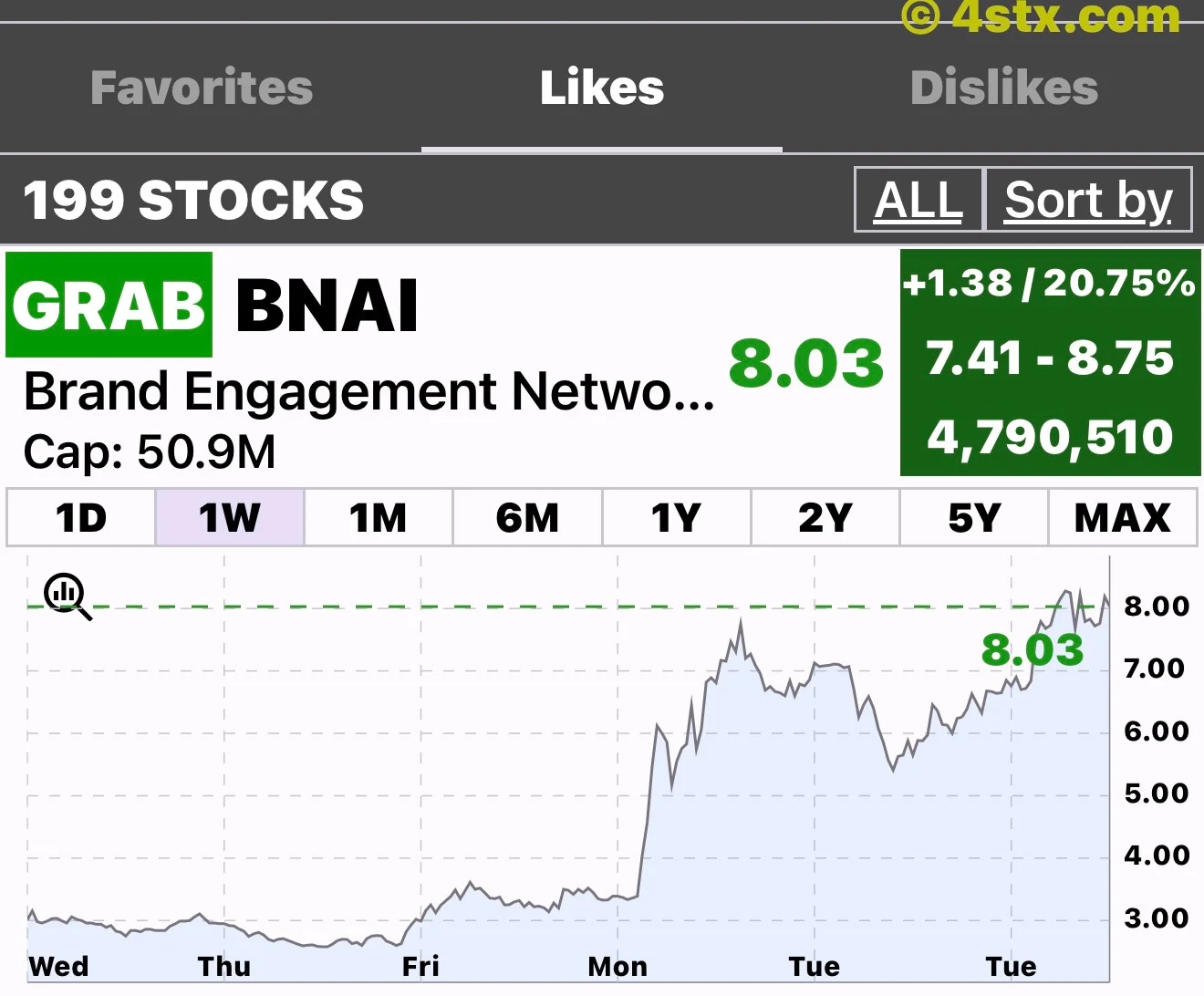
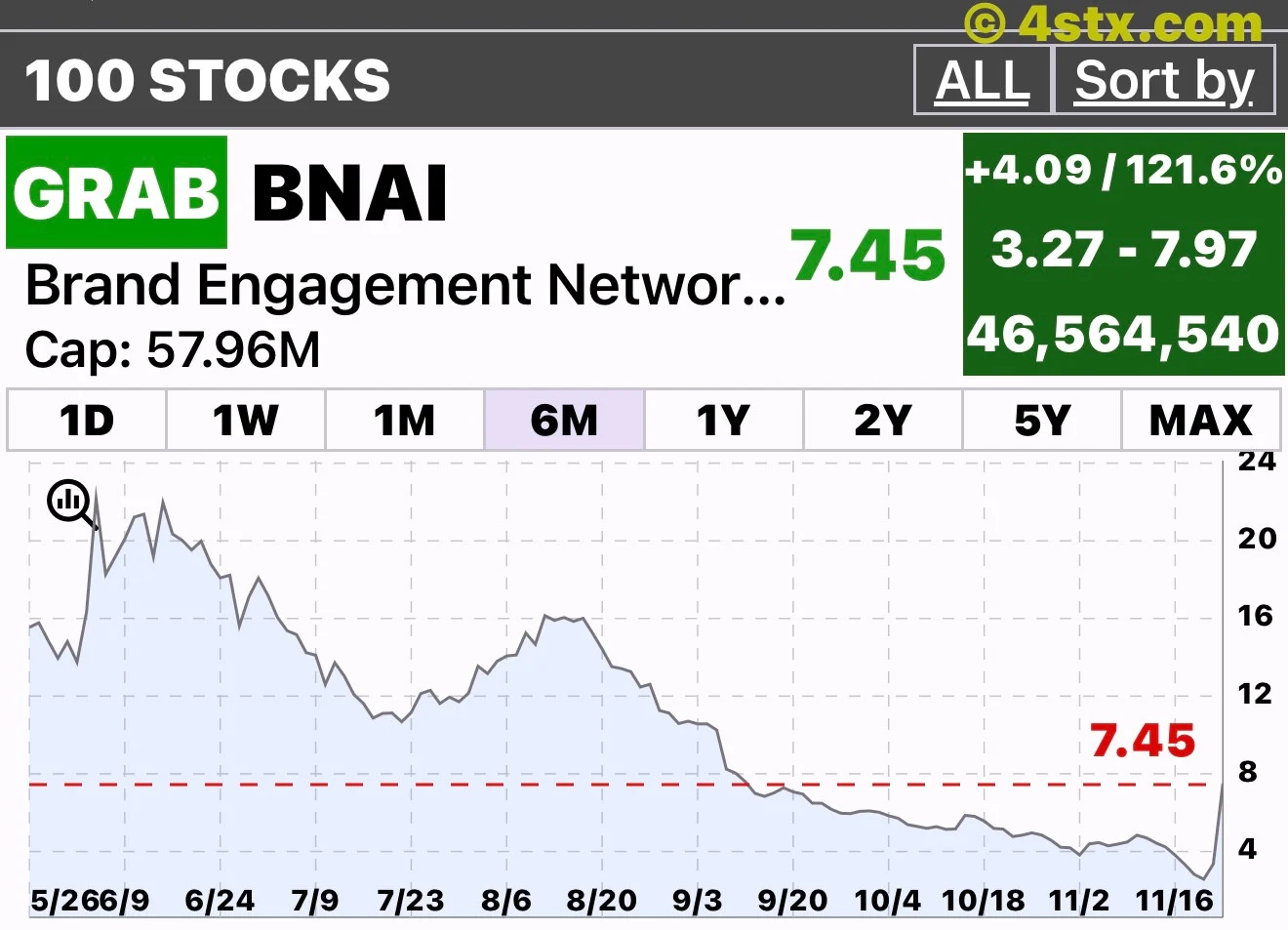
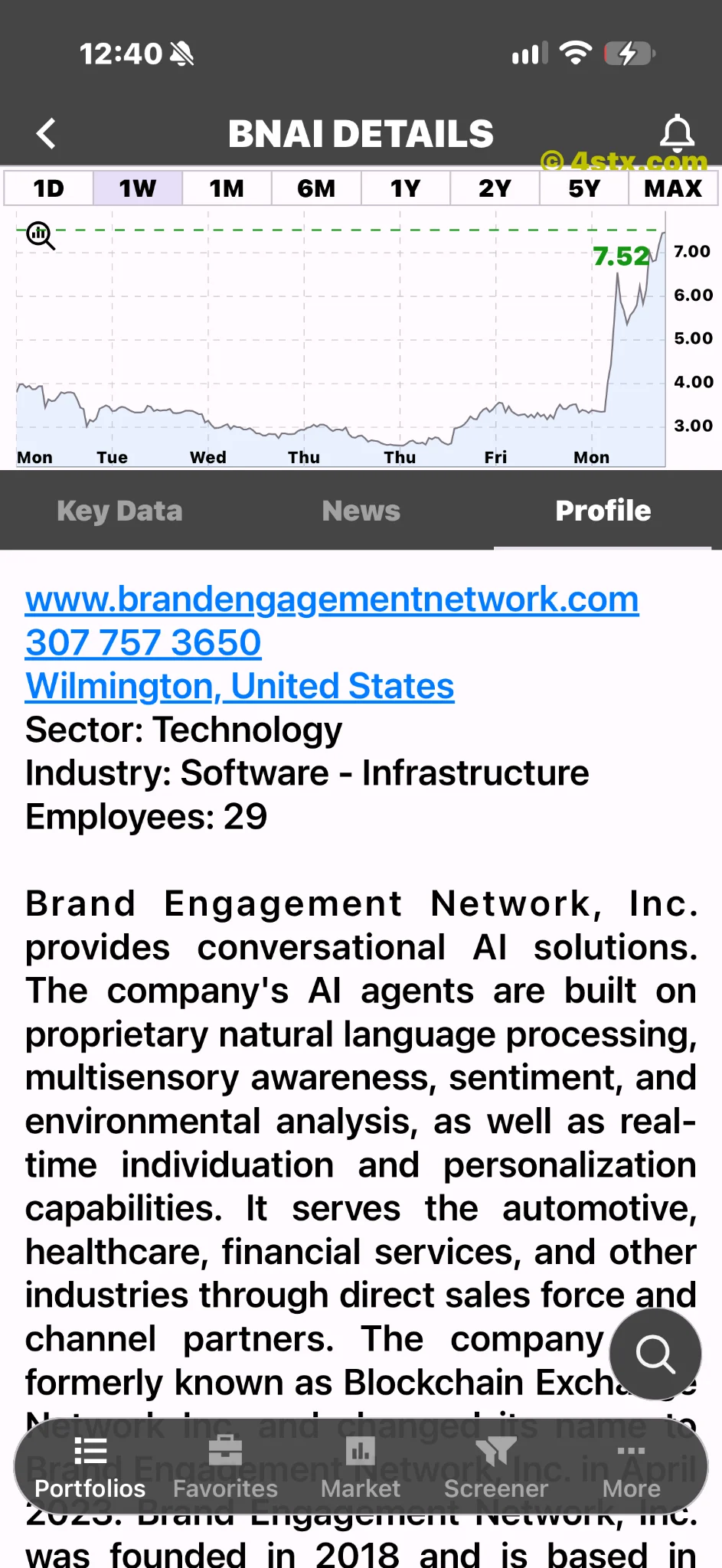
The StockRank cover shows BNAI at $7.45, up +121.60%, with 46,564,540 shares displayed. The profile’s device clock read around 12:40 p.m. Pacific; its slightly different quote is a separate observation, and the clock does not establish the precise timestamp of either quote. Neither is a final session figure. The six-month chart puts this rebound against a volatile broader decline; the weekly profile shows the bounce after recent weakness. The displayed volume is about 184.73 times ChartExchange’s reported 30-day full-day average of 252,062 shares. The session windows and feed coverage may differ, but the gap shows the scale of activity rather than who bought or whether the rally will hold. Results release · Trading activity
Why the acquisition matters, and what it cannot fix yet
The strongest bullish argument is that the Cataneo deal brings a paying business and software the company can build on. The transaction closed June 30, and the filing reports that Cataneo contributed about $1.93 million of post-acquisition revenue and $334,000 in net income from operations. Those are subsidiary results, not group profit or a measure of organic growth. The group’s quarterly loss narrowed from $2.48 million a year earlier, but operating activities still used $6.60 million in the first nine months of 2026. The company disclosed substantial doubt about continuing as a going concern and said existing cash and specified financing proceeds would not cover its expected needs for at least the next 12 months. That is management’s assessment, not a prediction of the date cash runs out. Acquisition and liquidity disclosures
What the price buys, and what would change my view
At $7.45 and roughly 7.63 million shares outstanding, the snapshot implies about $56.84 million in equity value. Against approximately $2.27 million in trailing sales through September 30, that is about 25 times sales, in our simple 10-to-40 “moderate” band. The ratio is not a multiple of profits, and that label says little about financing needs or dilution. The company is loss-making, so trailing P/E is not meaningful. The latest earnings were released today, November 23; no next company-confirmed date was verified. A follow-up quarter showing sustained customer revenue and materially lower cash use, or financing on disclosed terms that addresses the liquidity gap, would make the rebound more convincing. Historical revenue · Share-count cross-check
Download StockRank to compare the six-month and one-week BNAI charts before using the next financial report to reassess the bounce.
Which would convince you first: lower cash burn or new financing?