
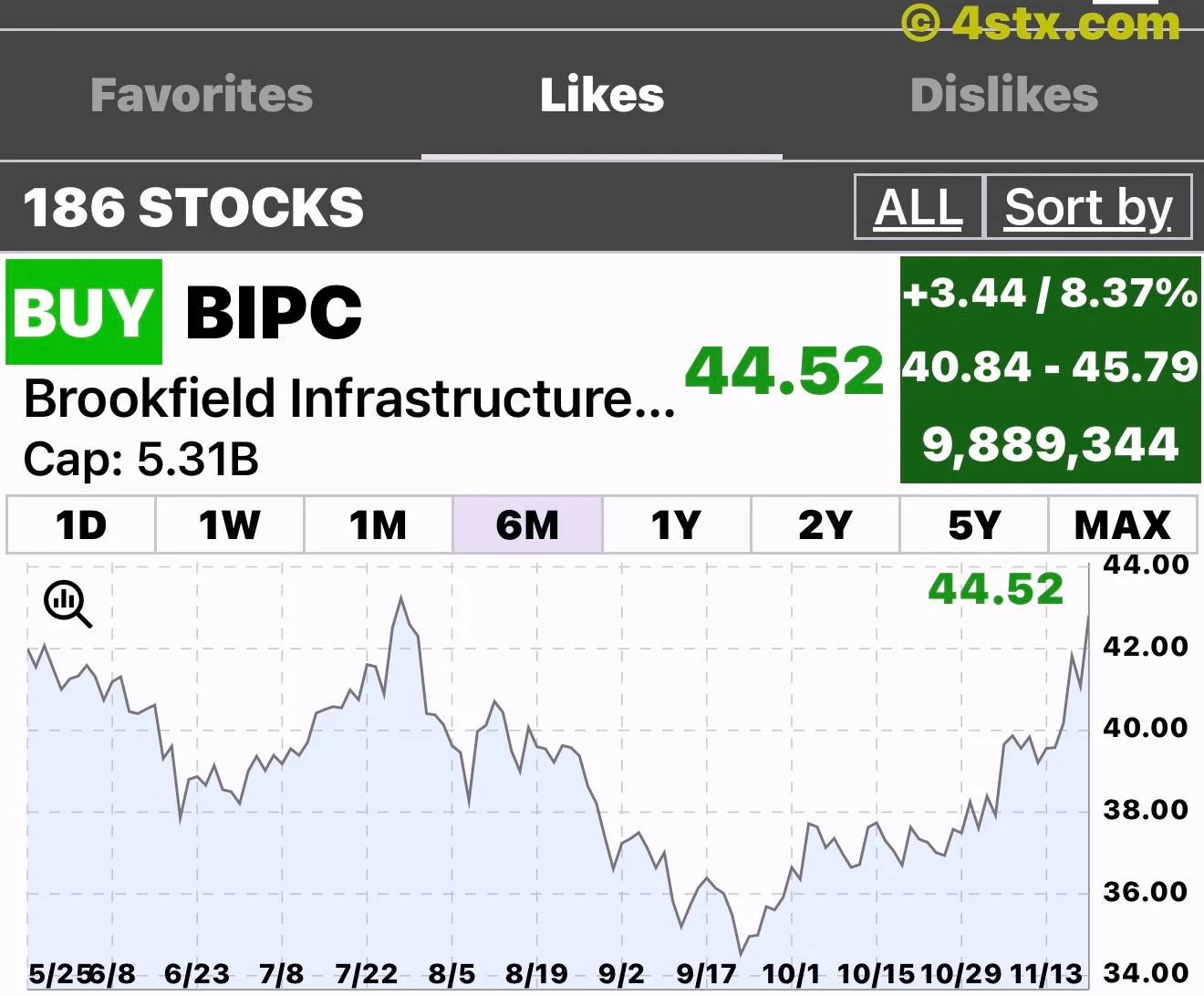
Brookfield Infrastructure Corporation, the legacy Canadian corporate vehicle in Brookfield’s infrastructure group, owns interests in operating infrastructure businesses, including utilities and midstream operations. I see a good argument for making this easier to own. The +8.37% snapshot is a poor basis for claiming the assets started earning more. Its own consolidated revenue for the quarter ended September 30, 2026 was USD 911 million, versus USD 917 million a year earlier. The figure belongs to the legacy corporation, not to the combined successor. The legacy annual report says personnel involved in operating activities are employed at operating subsidiaries rather than by the parent itself; a comparable headcount for the legacy issuer and successor was not verified. September-quarter results Legacy annual report
The transaction behind the timing
Brookfield announced on November 19 that it had completed the corporate simplification combining its previously separate publicly traded infrastructure vehicles under Brookfield Infrastructure Partners Inc. A November 20 transaction report documents the completed plan of arrangement. The Options Clearing Corporation also issued a November 20 notice describing the mandatory exchange and the one-for-one conversion terms applicable to legacy BIPC Class A exchangeable shares. That is unusually pertinent news for interpreting trading around the transition, although it does not establish why the last displayed trade occurred at its particular price. Completion notice Transaction report OCC notice
The bull case deserves a hearing. A common public vehicle could make it easier for investors to compare claims on the same business, and one ticker may reduce the friction of following separate securities. That’s a possible benefit to the way the market values the holding. A one-for-one conversion specifies what investors exchange, though. It doesn’t grant an extra share or increase what the pipelines and utilities earn. I’d separate a cleaner wrapper from a better business.
The issuer expected the successor’s Class A subordinate voting shares to start trading on the NYSE and TSX on November 23 under BIP. BIPC remains the legacy symbol shown in the supplied screenshot. SEC-filed completion release
Two quotes, two comparisons
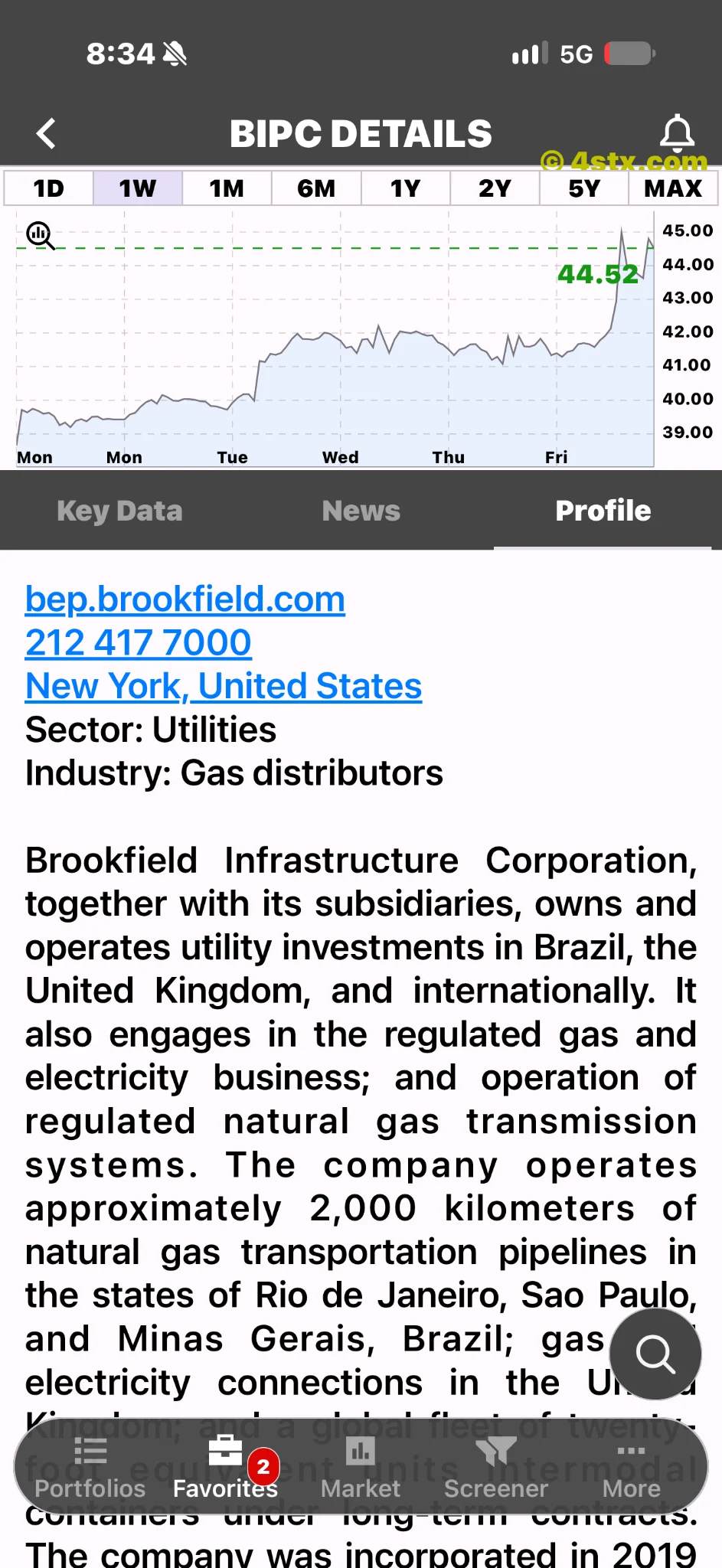
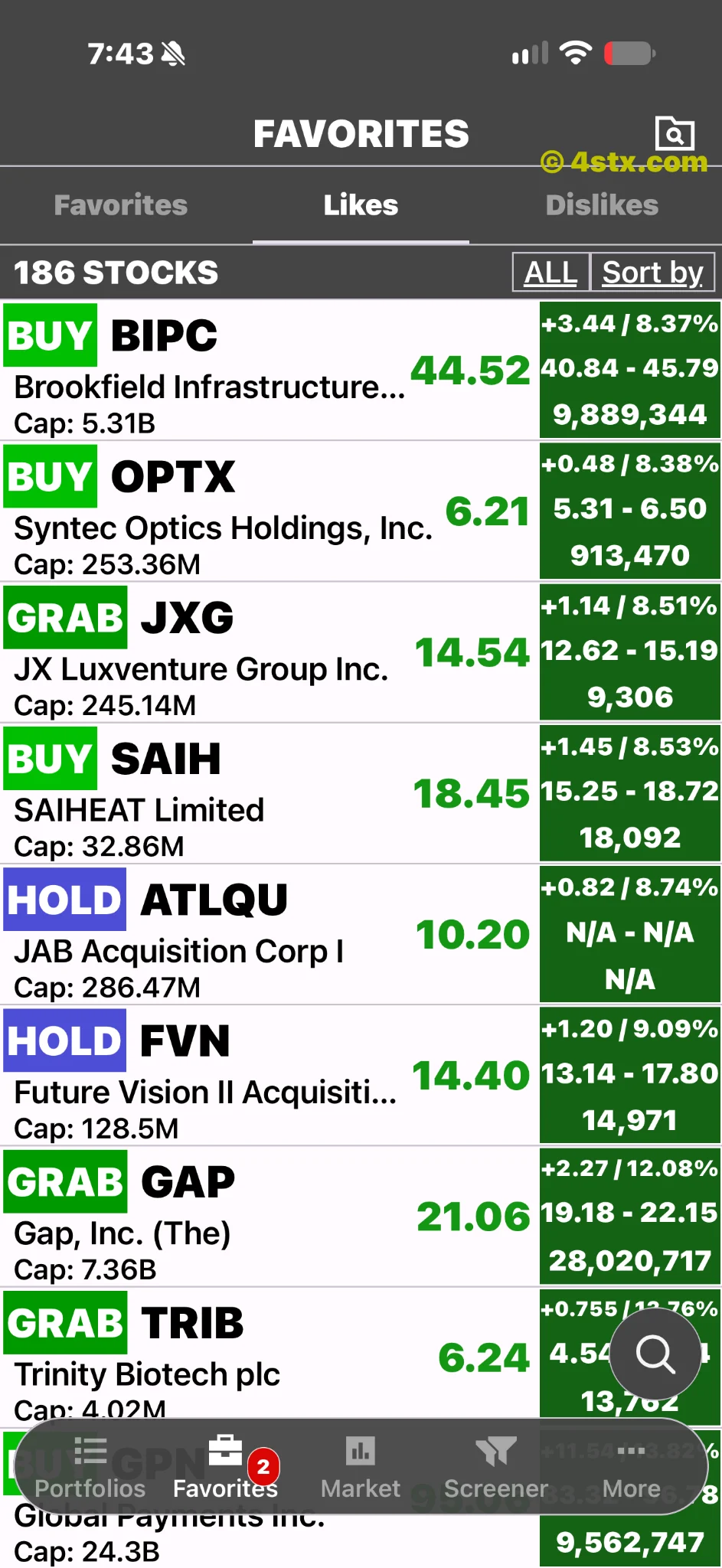
The StockRank image displays $44.52, +8.37%, and 9,889,344 shares. A market-data source places $44.52 in after-hours trading, near 7:58 p.m. Eastern on November 20, after a regular-session close of $42.82. The gap between those two figures is about +3.97%; it is not the app’s full displayed gain. The app volume is shown as supplied, not as an independently verified measurement of after-hours-only trading. Session quote
To put a value on the simplification, first compare like with like. Confirm the security identifier, the exchange currency and the trading session before putting any successor quote beside the old one. A matched after-hours price tells you the app’s figure had a reference point. It doesn’t create a reliable return series between the old security and the new one. A conversion can leave a perfectly real price on screen and still make the comparison misleading.
What the business reported before the exchange
The legacy corporation reported net income of USD 409 million for the September quarter, against USD 320 million a year earlier, even as revenue was slightly lower. Its accounts include a USD 161 million remeasurement gain on the liability associated with exchangeable shares. Operating cash flow was USD 295 million, against USD 389 million. None of those figures on its own explains the after-hours move, and the higher reported profit should not be read as equivalent growth in operating cash generation. Financial statements
The September release withheld the legacy corporation’s fourth-quarter dividend declaration while the arrangement was pending. The successor’s board subsequently declared a quarterly dividend of 45.5 U.S. cents per Class A share, payable December 31 to holders of record November 30. That is a declaration by the new corporation, not a continuation inferred from BIPC’s old schedule. Successor dividend declaration
Here is what would change my mind: the new issuer’s first accounts showing cash generation recovering, plus later distributions demonstrably supported by those operations. That would matter more to me than a tidy ticker symbol or a late trade. The declared distribution already gives investors a concrete date and amount to track, but the next statements will help them decide whether it comes with stronger cash economics. Check the broker’s identifier after the exchange before trying to compare old and new returns.
The one-for-one exchange makes timing important. Download StockRank and compare BIPC’s last week of trading with its six-month chart to see whether the late move reversed a longer slide or simply extended a trend that was already underway.
Simpler ownership or stronger business?